
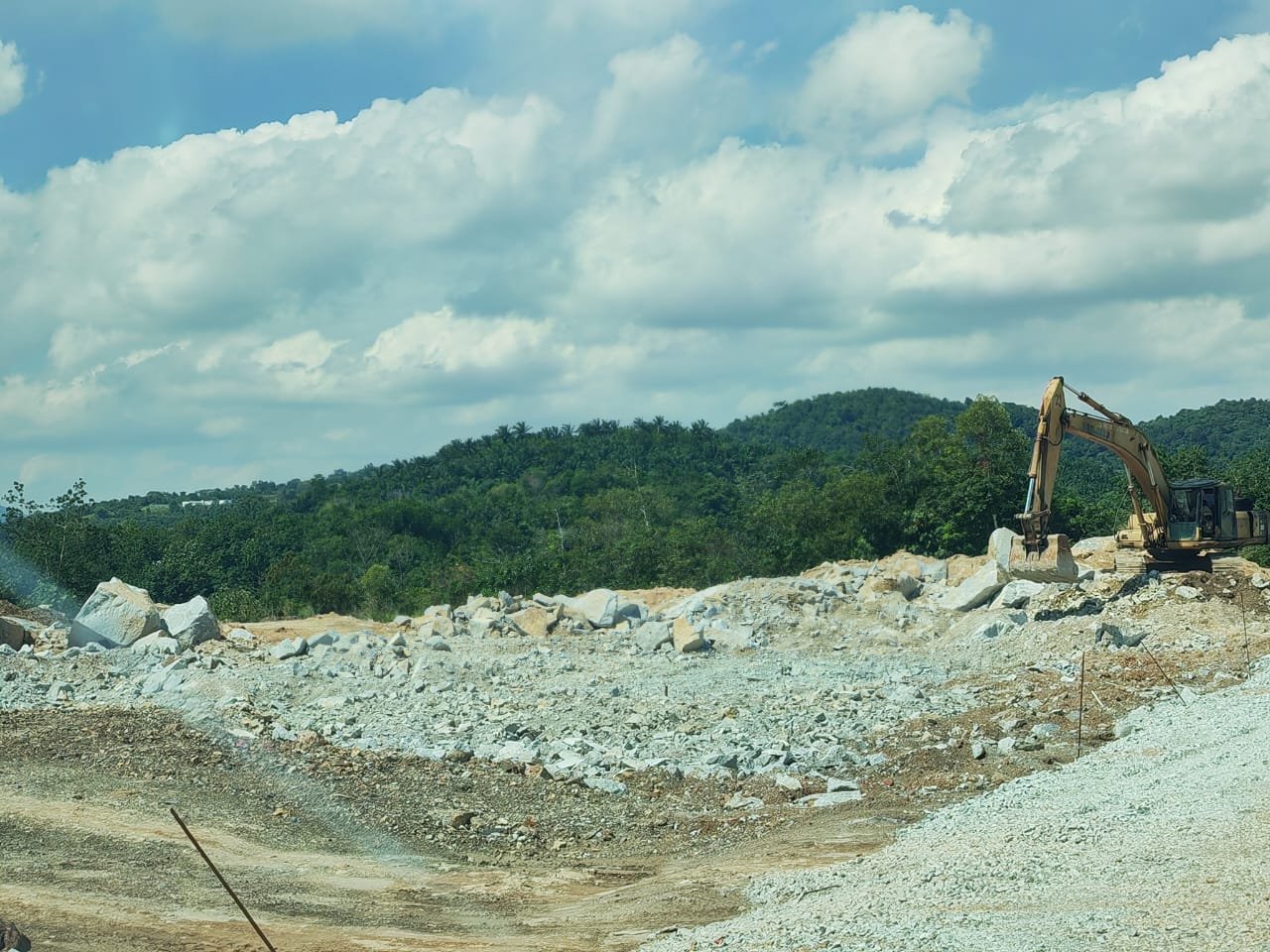
Most of the Basin is a thin skin of soil over something hard. Caliche, a cemented limestone-like layer, shows up a foot or two down in many places, and below it there can be limestone and gypsum. An ordinary excavator digs the first layer easily and then stops dead. The bid that assumed soft digging is now wrong, and the crew is waiting for a bigger machine.
The job is taking out material that standard buckets cannot move: ripping with a dozer, breaking with a hydraulic hammer, trenching with a rock saw or a chain trencher, drilling and, where permitted, controlled blasting. The method depends on the hardness of the layer, the depth of the cut, the closeness of utilities and structures and the amount of noise and vibration the site can tolerate.
We plan and coordinate hard-ground excavation for trenches, footings, pits and pads around Odessa, using specialized partners and a field lead who watches the cut so a rock price is only paid for rock.
How rock is defined and approved
Contracts define rock by how it is removed, not by what it is called. A common definition is material that cannot be dug with a specified excavator at a specified rate, or material that requires blasting or hammering. The definition belongs in the contract before work begins, and the field lead documents each area that qualifies with photographs and time records.
Blasting needs permits, licensed personnel, notices to neighbors and, near utilities or buildings, a vibration monitoring plan. In developed areas of Odessa, mechanical methods are the norm. The city or county may restrict hammering hours, so the permit office is part of the plan. Utilities near the cut are located and, where required, de-energized or protected.
Noise and vibration limits get written into the plan. A hammer on a yard in the industrial district draws little notice, but the same machine next to an office or a clinic draws calls. We tell neighbors what to expect, set working hours and keep a log of complaints and responses, so a small disturbance does not become a stop-work order.
Buildings that hit hard ground
A manufacturing plant with deep equipment pits, sumps and trench drains is a common place for hard excavation, since the pits are deeper than the surface soil. A self-storage facility or a warehouse hits hard ground at utility trenches and footings, even where the pad itself sits on fill.
In central Ector County, West Odessa occupies approximately 62.7 square miles and falls within Ector County Independent School District, and building there often means meeting caliche in the first few feet. Knowing that before the plans are final lets the designer raise the grade rather than dig it. Distribution and flex buildings that sit on large pads feel the same pressure at their dock pits and utility corridors, which are the deepest cuts on the site.
Sand, salt and old oilfields
The ground in this part of Texas is not uniform. A wind-deposited sand sheet roughly 70 miles long and 20 miles wide stretches from Crane County to Andrews County, the counties south and north of Ector County, with dunes up to 70 feet high at Monahans Sandhills State Park. Sand like that digs easily and slumps, while the harder layers below demand a different approach.
Below the surface, the geology holds surprises. The Wink Sink collapsed on June 3, 1980, reaching a width of 360 feet within 24 hours and a depth of 110 feet, caused by salt dissolution in the Permian Salado Formation. It is a rare event, but a good reason to read the geotechnical report closely, to ask about voids and to treat odd borings as a warning, and to price a contingency for the unknown. The Benedum oil field in northwestern Upton County was discovered in 1947, and 1,800 wells had been drilled there by 1954, so old well locations, pits and lines are possible in that country as well.
Why rock changes the number
Hard excavation costs more per cubic yard than soil digging, and the gap is large. Hammering is slow and wears out tools. Blasting needs drilling, explosives, matting and monitoring. Hauling shot rock takes more trucks and heavier equipment. Rock removed from a trench also needs more bedding, since sharp pieces cannot touch the pipe.
The main protection for the owner is a unit price for rock, set in advance, and a field record of how much was removed. We also suggest borings along trench lines and at pit locations, since a few extra borings cost far less than a change order. Rock that is cut cleanly also saves money on the other side of the ledger, because narrower trenches use less bedding and backfill and close faster. If the site has a choice, shallower foundations or higher grades can avoid the rock altogether.
What we do and who we bring
The ripping, hammering, saw cutting and blasting are done by specialist partners with the right equipment and licenses. We write the scope, measure and document the rock, manage the permit and the neighbors, and coordinate the sequence with the trades that follow. After acceptance of the excavation, the scheduled concrete contractor places the work in that cut and applies its specified finish.
The advantage of a single coordinator is judgment on site. When a rock appears, the field lead decides whether to rip, hammer or redesign, and calls the owner before the cost mounts. The partner's equipment is chosen for the cut, with a lighter hammer in tight utility corridors and a heavy ripper on an open pad, since the wrong tool turns a one-day dig into a week.
Services tied to hard ground
Hard ground slows excavation and trenching and backfill, and it changes the plan for drilled pier foundations, where drilling through rock needs different tooling. Pits for vaults and sumps, often part of manholes, vaults and structures, are the other common place for it.
Oil, gas and midstream owners meet rock constantly, and our work with those owners includes trenches for lines between equipment and pits for tanks and separators.
Find the rock before the bid is final
Pass along the boring logs and the dig sheets. Likely hard-ground zones get marked, extra borings get proposed, and a per-yard rock rate goes into the number so the budget stays honest.
Common Questions
How do I know whether the site has rock?
Borings tell part of the story. A geotechnical report lists the depth to hard layers at each boring. Between borings, test pits or probing with a heavy machine fill the gaps. We recommend both on any site with deep excavations.
Is blasting allowed in Odessa?
It can be, with permits and monitoring, but it is uncommon in developed areas. Mechanical methods such as hammering and saw cutting are the usual choice near buildings and utilities.
What does it cost to hammer rock?
The price depends on the hardness, the depth, the volume and the machine. A unit price per cubic yard, set in the contract, is the clearest way to handle it. We recommend asking for it in the bid.
Can we avoid rock by changing the design?
Sometimes. Raising the pad, shifting a trench line or changing a footing depth can reduce rock quantities. We look for these options early, while the plans can still change.