
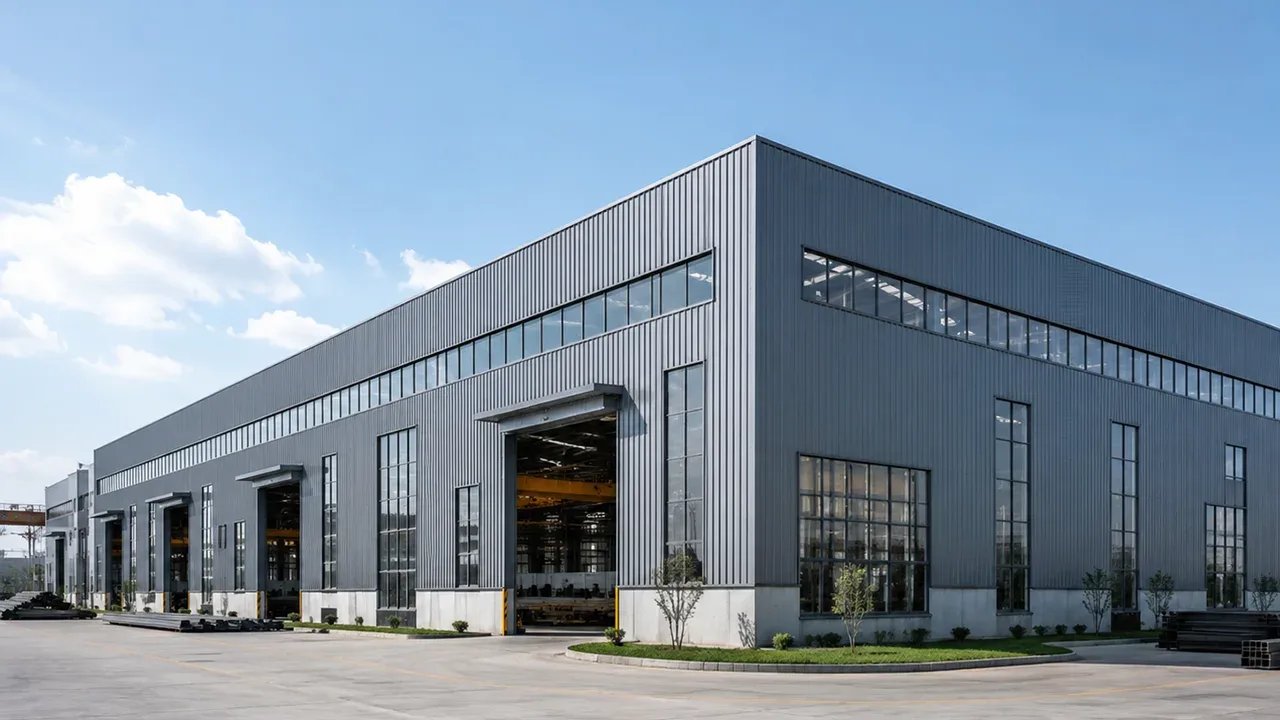
An industrial slab fails slowly. The first sign is a hairline at a column, then a spall at a saw cut where the forklift wheel hits the edge, then a low spot that holds oil. Odessa plant and shop owners have seen all of it, and they usually ask us a version of the same question: what will this floor look like after five winters of trucks? We build the answer into the mix, the thickness, the joints and the cure.
We pour floors, pads and yards for manufacturers, fabricators, plant maintenance groups and equipment builders. The work ranges from a new shop floor and a set of machine bases to repairs inside a running facility. Most of our industrial calls involve loads that office-minded designers underestimate: tracked equipment, loaded flatbeds, heavy pallets and the dropped steel that every shop sees eventually.
The same owners often need related yard work, such as heavy-haul approaches, wash pads and containment. Our pages on oil, gas and midstream owners and logistics and warehouse developers describe neighboring work that overlaps with plant projects.
What moves the price of an industrial floor
Thickness and reinforcement lead the price, followed by joint layout, surface finish and the preparation of the subgrade. A floor for pallet jacks costs far less than a floor for a loaded forklift with solid tires, and neither costs what a machine foundation does. We ask for the heaviest wheel load, the turning radius and the slab thickness on the drawings before we price anything.
The biggest avoidable cost is a base that was not compacted correctly. Paying for good caliche base up front is cheaper than cutting out a failed panel. We also list the finish: a hard trowel for smooth wheeled traffic, a lighter broom where drivers need grip. Our bid for industrial concrete floors lists each of those decisions as a line item.
Working in a plant that keeps running
Plant owners rarely shut down for a pour, so we plan around live equipment. Lockout steps, hot work restrictions, forklift lanes and chemical storage all shape where we can set forms and where trucks can drive. We attend the owner's safety orientation and follow the permit process for each area of the facility.
Dust control matters inside a building, so we saw cut with water or vacuum attachments and keep the silica number low. Concrete trucks are staged outside and the pump line is run in, not the truck. For work near process equipment we confirm the exclusion zones and keep concrete trade partners out of them until the plant manager releases the area.
Industrial sites we reach from Odessa
Industrial land clusters along the interstate, the loop and the highways that radiate from the city. Andrews is served by US 385 and State Highways 115 and 176, and we mobilize crews to plants and yards there. Closer in, the Odessa industrial district and the oilfield service district in Ector County account for a large part of the plant and yard work we see.
Because Winkler, Ward and Crane counties each have their own soils and haul patterns, we plan travel time into the schedule and keep a crew assigned to the job from the first form to the last saw cut.
Concrete placed by concrete trade partners
Concrete trade partners place and finish industrial concrete: formwork, steel, pour, finish and cure. We know the difference between a floor that will be sealed and one that will be left bare, and we choose the finishing steps to match.
Utilities and earthwork go to trade partners we coordinate. The plant gets a single schedule, and we make sure underground piping, conduit and subgrade are signed off before we place anything over them.
Fitting a pour into a production calendar
The best window is often a weekend or a planned shutdown. We lay out the pours in sections that can be finished in a day, protect adjoining areas with plastic and plywood, and cure the slab for the required days before equipment returns. If a line cannot stop, we phase the floor so one half is available while the other cures.
Ready-mix delivery in summer needs early starts. We book the plant, the pump and the testing lab together and confirm them the day before. Crews arrive before the first truck so forms, steel and elevations can be checked once more, and the plant manager gets a text when each section is finished and cured enough to open.
Ground and history behind Basin industry
Odessa's Loop 338 study places the southwest segment between West I-20 and South US 385 at 3.7 miles. We relate an industrial concrete package to the actual delivery and staging arrangement at the property, rather than infer truck access from a nearby highway. Equipment loads and the approved drawings then guide the foundation and floor scope.
Ground conditions are part of the story too. In 1928 and 1929 a plan to build a million-barrel earthen oil storage tank at McCamey failed because the limestone below could not carry the weight of the crude. That episode is a reminder that bearing capacity is a design question, not an assumption. Winkler County also has a belt of active windblown sand dunes rising 30 to 40 feet above the surface, which affects both site prep and maintenance of finished slabs.
Industrial buildings we pour
We work on manufacturing plants, fabrication shops, flex and light industrial buildings and equipment storage buildings. Each has its own floor and apron needs, from the heavy-duty bay to the lighter office wing.
A fabrication shop needs a floor that survives dropped plate and welding carts, with embedded plates where a jig or column will bolt down. A plant with a washdown area needs slopes to a trench drain and a finish that does not hold water. An equipment storage building mostly needs a durable slab and a wide apron, because the trucks that come in and out are the heaviest thing on the property. We ask what the building is for before we talk about concrete.
Services that follow the floor
Industrial owners often follow a floor with equipment pads and machine foundations, sawn joints and repairs. We are glad to bundle them, and we tell you early when a repair is cheaper than replacement. If a slab is sound but a joint has broken down, a sawn and refilled joint costs a fraction of a new panel. If the base has washed out, replacing the panel is the honest answer, and we say that too.
Walk the floor with us before the drawing is final
Give us the load list, the drawings and the shutdown dates. We will go over the section, joints and finish with your maintenance lead and mark the points that change cost. Call Concrete Contractors of Odessa to schedule the walk.
Common Questions
How thick should an industrial shop floor be in Odessa?
The engineer sets the thickness from the heaviest wheel load, the subgrade and the reinforcement. Many shop floors are thicker than offices and warehouses, and floors under tracked or loaded equipment are thicker still. We will review the drawings and tell you if the section looks light for how the floor will be used.
Can you pour during a plant shutdown?
Yes. A shutdown calendar is a good fit for a floor replacement or a set of machine bases. We build the pour plan around the dates, line up the testing lab and plan the cure so equipment can return on schedule.
What causes joints to fail on a plant floor?
Wheels hit joint edges repeatedly, and an unprotected edge will spall. Saw timing, dowels, joint spacing and the filler all matter. We use the layout the engineer provides and check that the filler matches the traffic.
Do you handle floor repair in occupied buildings?
We do. Repairs are done in sections with dust control, and the area is released when the cure and strength requirements are met.
How do you deal with wind-blown sand on a new slab?
We keep forms clean until the pour, shield fresh edges and cure the surface promptly. Sand that lands on a wet surface becomes part of the finish, so we avoid placing in the windiest hours when we can.