Machines are heavy and they move. A compressor shakes, a pump pulses, a generator hums at one frequency all day, and a press hits the floor on every stroke. The pad under any of them is a small structure, not a patch of slab, and it is designed around weight, vibration, and the bolts that hold the base plate.
In the Odessa area we pour pads for compressors, pumps, generator sets, tank supports, skid packages, shop machinery and process equipment. Most come with a vendor drawing that gives the footprint, the bolt pattern, the weight and the static and dynamic loads. The structural engineer turns that into thickness, steel and, where needed, an isolation joint from the surrounding slab.
Fit matters more than looks. A bolt pattern that is off by a quarter inch can stop a crane lift. A pad that is out of level makes a machine run rough and wear early. We check the template, the elevation and the pad dimensions against the vendor drawing before pour day, and again before the concrete goes off.
What goes into a machine pad
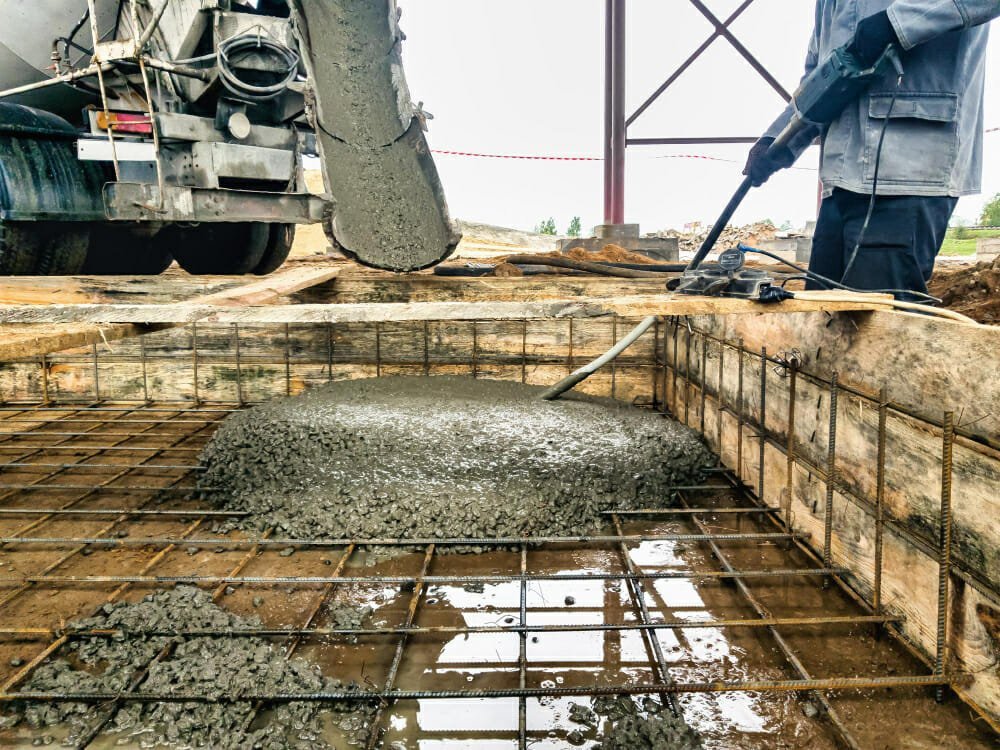
The work starts with the subgrade. We prepare and compact the base, set forms, place the reinforcing and set bolts in a rigid template, with sleeves or cast-in plates where the drawing calls for them. Concrete is placed in one continuous pour, vibrated around the embedded items and finished flat or sloped as specified. If grout is needed under the base plate, we leave the surface prepared for it.
Large pads can take mass-pour treatment, and we cover that practice in mass concrete pours. Small pads for a pump skid or a generator set are a day's work for one crew, and we normally pour them early so the surface is finished before the wind picks up.
Plants, yards and service companies
Compressor stations and gathering sites belong to oil, gas and midstream, where pads are often poured on short notice and tied to a rig or equipment delivery date. Manufacturing and fabrication owners add presses, saws and conveyors. Utilities and energy companies need pads for generators and transformer vaults.
In 2022 Andrews' development corporation secured $1.5 million in federal money for streets and water lines at its Northwest Business Park and paired it with $2.4 million of local dollars. Park sites like that bring new tenants, and each tenant brings equipment that needs a pad.
Heavy lifts and live equipment
Equipment pads are often poured next to running machinery. We set barricades, agree on the work area with the yard manager and keep concrete trucks and the pump out of the lanes used by operators. Lockout of nearby equipment is the owner's job, but we ask for the status each morning.
Crane picks happen right after strength is reached, and the concrete partner stays clear. Hot work and bolt tightening are done by the equipment installer, and we hand over the pad with the surface clean, bolt threads protected and the layout documented.
Pad work around the Basin
Crews head out to Odessa, West Odessa, Gardendale, Monahans, Andrews, Kermit and the oilfield communities around them. Many pads sit at remote sites with caliche pads and gravel access, and truck access plans matter there as much as the pad design.
Southwest Sandhill covers 7.4 square miles at an elevation of 2,598 feet, bordered on the north by Thorntonville and Monahans. Sites in sandy country like that call for a firm base and a wind plan before concrete trucks arrive. Details for city-side work are on our Odessa page.
Services that go with a pad
Pads connect to curbs, drains and containment. A pump pad often needs containment pads and secondary containment, and a wash area needs trench drains and concrete drainage. Heavy machinery floors fit with industrial concrete floors.
We coordinate trade partners for electrical conduit, grounding and piping that cross the pad, so sleeves are in place before the concrete is.
What moves the price
Cost follows volume and complexity. A large mass pad means more concrete and more rebar. A tight bolt layout means a template and survey time. Remote sites add haul time for trucks and crew, and hot, windy weather may mean cooling and covering the pour. Short notice adds overtime.
Soil work is often the swing item. If the subgrade needs over-excavation and replacement with engineered base, the cost rises and the schedule stretches. Send us the geotechnical findings early and we can price the base with the pad.
Template first, concrete second
We build the pad for the machine, so the vendor drawing governs. Anchor bolts and sleeves are set in a rigid template, surveyed to the drawing and checked again after the concrete is placed. Any bolt that drifts is documented before the concrete sets, since changes after the cure are slow and costly.
Curing is part of the job. Pads are covered with blankets or compound immediately, and the surface is kept damp in summer wind. The goal is a slab that reaches design strength without crazing before the machine arrives.
Training buildings, interchanges and new pads
Odessa College took a $325 million Vision 2030 bond to voters in May 2025, and the package carries a $60.1 million workforce training building. A facility that trains people for industrial work usually contains the machines and equipment they train on, and those need foundations.
TxDOT has $424 million of work going into I-20 across Midland and Odessa, covering extra main lanes, new interchanges and rebuilt ramps, and expects full opening to traffic in 2028. Better access draws industrial users to the corridor and speeds up deliveries of heavy equipment to their pads.
Pad drawings and set date
Send the vendor drawing and the delivery date for the machine. We will check the bolt pattern, size the base and give you a pour day that fits the installer's crane.
Common Questions
How thick should a machine foundation be?
The thickness comes from the equipment weight, the vibration, and the soil. Small pads may be six to twelve inches, while heavy rotating equipment needs a deeper block. The vendor and the structural engineer set it, and we pour to their drawing.
Do pads need to be separated from the floor slab?
Often yes. An isolation joint keeps machine vibration from travelling into the building slab and cracking it. The joint detail is on the structural drawing, and we install the filler material before the pour.
What is the tolerance on bolt locations?
It is set by the equipment vendor and is often tight, a fraction of an inch. We use a rigid template, survey the pattern and re-check it before and after the pour. Tell us early if the vendor changes the bolt layout.
How long until the machine can be set?
Cure time depends on mix design and weather. The specification may require a strength result before loading, and the engineer may ask for grout after that. We schedule the installer's crane around the cylinder breaks.
Can you pour a pad at a remote caliche site?
Yes, if truck access is workable. We check the haul route, the gate widths and the soft spots in advance. For long hauls we discuss retarder and delivery sequence with the supplier so the mix is placeable on arrival.
Should the pad be reinforced or left plain?
Reinforced is the norm for anything that carries a rotating machine or a heavy skid. The steel controls cracking and ties the block together under dynamic loads. A plain slab may be fine for a light tool stand, but the engineer should confirm. We follow the stamped design and will flag questions before ordering steel.