
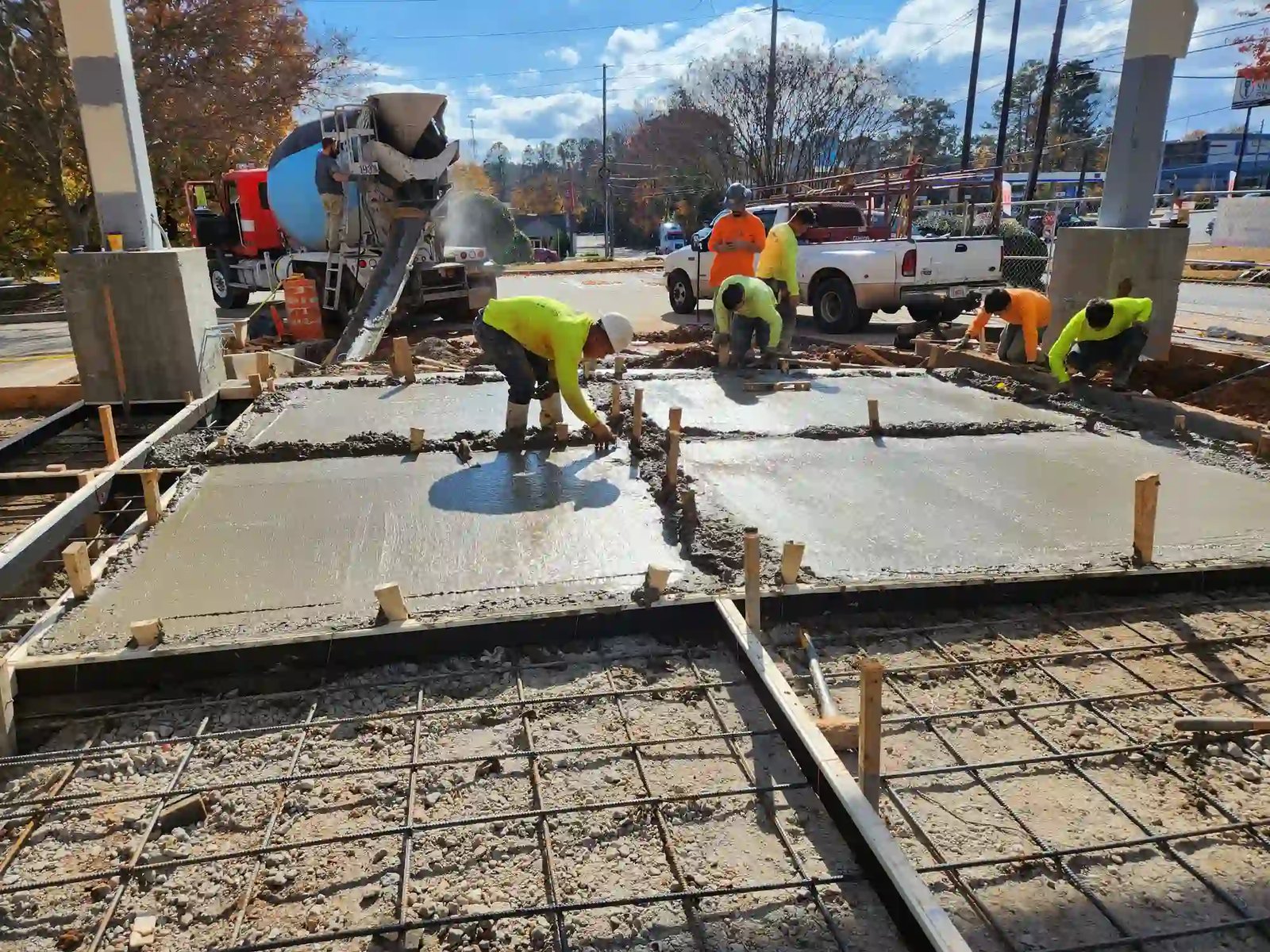
Concrete work planned around the property
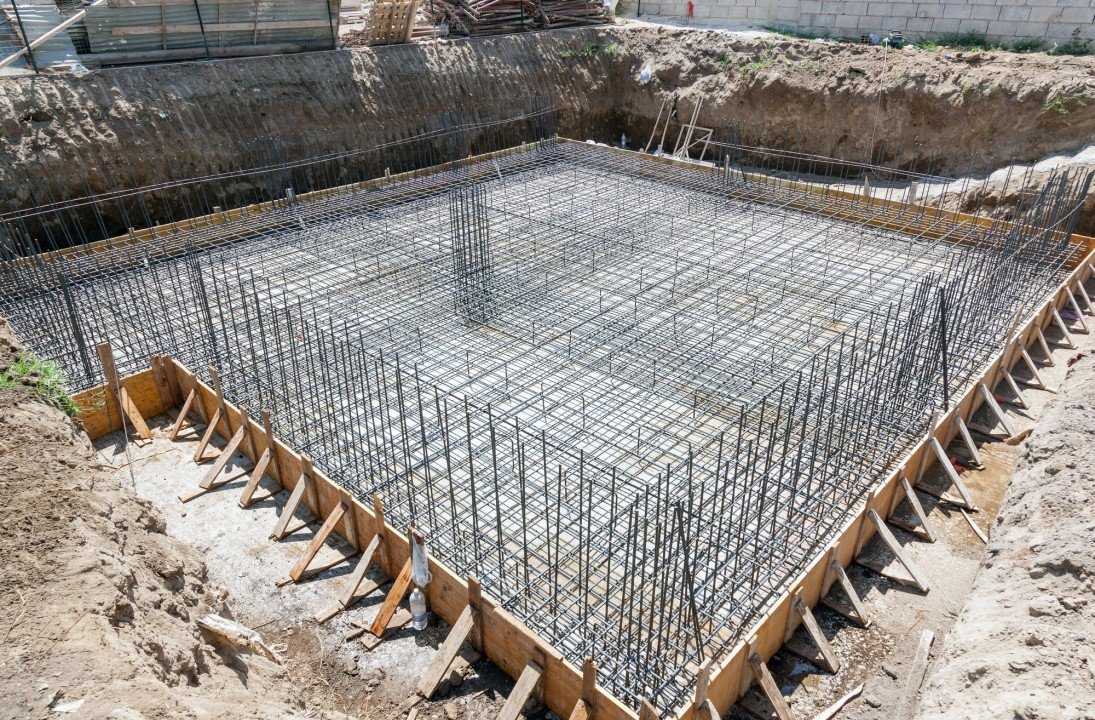
Concrete Contractors of Odessa pours for the trucks first and handles the paperwork second. That order sounds backward until you stand on a service yard at seven in the morning and watch what crosses the slab. Water trucks, vac trucks, pipe haulers and pickups all take the same lane, the yard manager is already on the phone, and the concrete has no say in what happens next. We build for that reality: heavy sections, sound joints, proper base and a cure that suits the weather.
We are a concrete contractor with utilities and earthwork support, working in Odessa, Ector County and the Permian Basin towns around them. Concrete trade partners place and finish foundations, slabs, flatwork, paving, pads and drainage concrete. Underground utilities, grading, excavation and soil work go to trade partners that we coordinate, and we manage the handoffs, so an owner or a general contractor deals with one company about one schedule.
The kind of work we do
The work leans industrial because the city does. Service yards, shop floors, lay-down areas, truck aprons, containment pads and equipment foundations make up a large share of what gets poured in Odessa, and we know how those slabs fail and how to keep them from failing. Around that core sits the plain commercial and public work of a working city: parking fields, sidewalks, ramps, curb and gutter, clinic floors, school walks and small retail pads.
Our commercial concrete contractor service is the broadest description of what we do, and it breaks into foundations, slabs, paving and site concrete. A yard owner is more likely to start with containment pads and secondary containment or a heavy paving package. A manufacturer is more likely to ask about floors and machine bases. We talk about each in terms of the load it will carry, because the load decides the thickness, the steel and the joints.
How we think about a slab
A slab is a stack of decisions. The ground comes first. Much of the Basin sits on sandy soil over caliche and limestone, which makes a good base when it is compacted at the right moisture and a poor one when it is loose or wet. Then the section: thickness, reinforcement and the joint pattern. Then the mix, which must suit the temperature, the haul time and the finish. Then placement, finishing and curing, which are the steps most affected by the day itself.
Wind, sand and heat set the tone for the last of those. A pour that looks easy at dawn can turn difficult by noon, with water leaving the surface quicker than the finishers can follow. We start early, protect fresh edges, keep trucks moving and cure promptly. Our write-up on hot and windy weather concrete explains the routine in more detail for owners who want to see what the crew actually does.
Who we build for
Our clients are people with a deadline and a budget. Oil, gas and midstream owners hire us for yards, shops and pads. Industrial and manufacturing owners hire us for floors, plant maintenance slabs and machine bases. Logistics developers hire us for warehouse floors and truck courts. General contractors, commercial developers, school and healthcare owners, utility companies, homebuilders and farm and dairy owners each have their own pages on this site, and each has a different way of buying concrete.
General contractors and CM firms tend to need a subcontractor who prices the package fairly, shows up on the date and keeps the superintendent informed. Public owners need documentation and compliance. Developers need speed and a clean turnover. Rural owners need a contractor who understands animals, distance and water. We adapt our process to each without changing the standard of the concrete.
The places we work
Home base is Odessa, the Ector County seat, with Interstate 20, US 385, State Highway 191 and Loop 338 carrying trucks through town. From there we mobilize crews to West Odessa, Gardendale, Goldsmith and Notrees, to Andrews on US 385, and along Interstate 20 to Monahans. The northern run follows State Highway 302 through Notrees toward Kermit and Wink, and the southern runs reach Crane, McCamey and Rankin. We also work in Midland, which shares the Basin and many of its customers.
Each of those places has its own ground, its own permit office and its own habits. Dune sand shows up in Ward and Winkler counties. Limestone and caliche are common in Upton County. Kermit’s flat ground floods, and the town built crown streets to deal with it. We plan for the local condition rather than treating the Basin as one uniform site.
Concrete and site work responsibilities
We coordinate concrete trade partners for placement and finishing. That covers forms, reinforcing steel, embedded items, the pour, the finish and the cure. We manage the sequence and the handoffs so formwork and finishing responsibilities remain clear through the final surface inspection.
Utilities and earthwork are different. Trenching, pipe, conduit, excavation, grading and soil work go to trade partners that we coordinate. We set the order of work, check the base and the backfill before we pour, and report to the owner where each trade stands. The services on this site for site utilities and building pad preparation describe the scopes we manage in that way. It is a straightforward arrangement that keeps the owner from having to chase several subcontractors, and it keeps us honest about which trade is responsible for each part of the work.
Buildings and sites
The buildings that matter most to our clients are the ones that carry a business: warehouses, manufacturing plants, flex and light industrial buildings, truck terminals, metal buildings, offices, clinics and schools. We also pour retail centers, self-storage, multifamily projects, parking structures and hangars. Each building type has a concrete problem at its center, such as flatness in a warehouse, wheel loads in a plant, or accessible routes at a clinic.
Around every building is a site. Parking, aprons, walks, curb and drainage often cost more than the building floor, and they get less attention in planning. We make sure they appear in the bid with their own sections and their own joint layouts.
How a job runs
Most jobs start with a plan review. We read the drawings, note the places where the section looks light or the drainage looks doubtful, and tell the owner or GC before the bid goes out. After award we hold a pre-pour meeting, confirm inspection hold points and line up the testing lab, the pump and the ready-mix plant. On pour day we are on site before the first truck, check the forms and steel one more time and walk the embeds with the superintendent.
After the pour we cure, saw joints within the window the concrete allows and protect the surface from traffic. At turnover the owner gets a written release schedule and the records they need. Safety runs through all of it: orientation, job hazard analysis, traffic plans, silica controls and heat stress breaks. We follow the owner’s rules on active yards, plants, campuses and public streets.
What we do not claim
We do not claim a record of awards or a list of famous clients, and we do not publish numbers about our past. The case for hiring us rests on how we plan a pour and how we answer questions. If you want to know whether a section is thick enough, whether a base is ready or whether a pour should wait for the wind to drop, ask us. The answers will be specific to your site.
Common Questions
What does Concrete Contractors of Odessa pour most often?
Yard and shop slabs, plant floors, aprons, pads, parking and flatwork. The industrial side of Odessa drives much of the demand, and the commercial and public work of the city fills in around it.
How is excavation and utility work handled?
We manage the excavation, grading and underground-service handoffs with the respective trade firms. Their completed work is coordinated with the concrete specialists’ placements and finishes.
Where do you work?
Odessa and the communities around it, including West Odessa, Andrews, Monahans, Kermit, Crane, Gardendale and McCamey, plus Midland. Send the address and we will confirm travel and schedule.
How do you handle summer heat?
We start early, keep ready-mix moving, use curing blankets or compounds and split large placements. Wind and sand get the same attention.
How should I request a bid?
Send the drawings, the geotechnical report where one exists, and the date you need the work finished. We will review them and tell you what could change the price.