
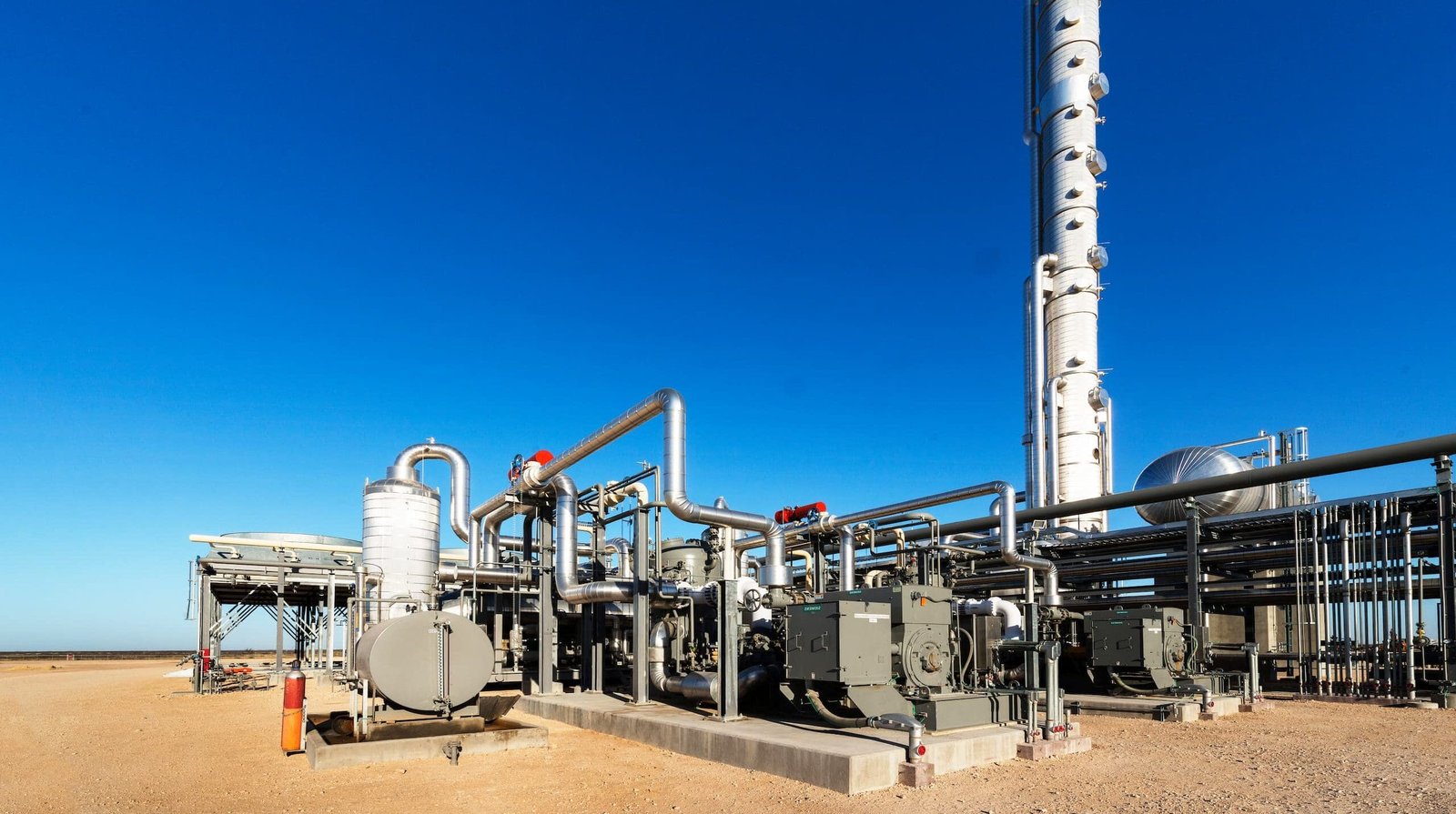
A service yard is judged by what drives across it every day. Pickups, water trucks, vac trucks, flatbeds with pipe, forklifts with baskets of fittings, and the occasional crane all cross the same slab, and the yard manager notices the first rut before anyone else does. We build yards, shops, wash bays, containment pads and equipment foundations for oilfield service companies, midstream operators and the contractors who work for them.
The oil and gas side of Odessa has its own rhythm. Customers work fast. A yard that was a vacant lot in spring has to take trucks in summer. Plans change as a customer adds a bay or moves a fence line, and the concrete package has to move with it. We keep our estimating practical, price from the loads rather than from habit, and tell the owner in plain terms what each section will carry.
We also pour the plain work that supports a yard, from the office slab to the truck apron at the gate. Owners of industrial and manufacturing sites will recognize much of the detail, and the two sectors share crews and methods.
What concrete trade partners pour and what we line up
Concrete trade partners place and finish all of the concrete: the forms, the steel, the pour, the finish and the cure. For yards and pads we use heavy sections, tied reinforcement and joints cut to suit wheeled and tracked loads. For containment pads we form curbs and sumps to the drawings and pay attention to water stops and sealants where the engineer specifies them.
Excavation, utility trenches, process piping and base preparation fall to trade partners that we coordinate. Concrete trade partners do not do that work, and we keep the line clear. We set the dates, confirm that the caliche base is compacted and ready, and take responsibility for the concrete that sits on it. Our containment pads and secondary containment work and our equipment pads and machine foundations are the two scopes oil and gas owners ask for most often.
Why oilfield concrete is its own kind of work
Oil was found at Wink in 1926 in the Hendrick oilfield in Winkler County, and the Basin has been a place where concrete and steel follow the drilling ever since. Today the work is service yards, pad sites, shop buildings and facilities for companies that keep production going. An oilfield services company opened a new Odessa operations facility in 2026 that brings more than 1,400 employees together under one roof, which shows the scale of what a single consolidated site can become.
For concrete, the lesson is that sites get large fast. A yard that began with a fence and a shop gets a wash bay, a parts building, a fueling pad and a second row of parking. We lay out the first phase so that later phases tie in cleanly, with joints and drainage that continue the pattern rather than fight it.
Safety on an active oilfield yard
Oilfield sites have rules, and we follow them. Orientation, drug and alcohol policies, personal protective equipment, hazard communication, hot work permits and stop-work authority are all standard. We attend the safety meeting, post our job hazard analysis and report incidents the way the operator requires.
Concrete trucks are among the largest vehicles on a yard, so we agree on routes before the first delivery. Spotters work the backing zones, and we mark the pump setup area so it stays clear of traffic. Hot weather adds heat stress controls, water and shade for crews. Silica dust from cutting or coring gets wet-cut or vacuum-controlled. Where a site handles chemicals, we confirm what is stored near the work and keep construction equipment out of spill areas.
Loads, spills and what the slab must resist
Yards see axle loads that office pavement never meets. A loaded water truck, a pipe hauler and a crane can all use the same lane, and the slab section has to reflect the heaviest of them. Spills are the other consideration. Oil, brine, hydraulic fluid and cleaning chemicals attack a poor surface, so we talk through sealers, curbs and drains with the owner and the engineer.
We also ask where the water goes. A washdown area needs slope to a sump, and the sump needs a pump or a vac truck plan. A yard that drains to the fence line instead of an inlet will eventually fail an inspection. Our truck courts and dock aprons pages explain the section and joint thinking that applies to heavy yard lanes.
Yards and plants we reach
Drivers reach West Odessa from the interstate at exits 104, 108, 112 and 113, since the community sits north of I-20. It is bounded by I-20 on the south, State Highway 302 on the north, FM 866 on the west and the city of Odessa on the east. That makes it a convenient place for yards that need highway access and room to grow, and we mobilize crews there regularly.
Beyond West Odessa we work along SH 302 toward Kermit and Wink, along US 385 toward Andrews and Gardendale, and along I-20 toward Monahans. The Odessa industrial and oilfield service district remains the densest concentration of yards and shops.
From bid to turnover
We ask for loads, drawings and the utility plan, then walk the site with the owner’s yard manager. We price the full package, not only the pad. We list the assumptions that could move the number and keep the scope in plain language.
During construction we pour in sections that match the yard's operating pattern. One side stays open while the other cures. At turnover we give the owner a written cure and release schedule and a short record of the mix and pour dates.
Typical oil and gas concrete scope
The scope usually includes a shop floor, a wash bay with a sump, a heavy yard slab, a truck apron at the gate, an office pad, a fueling area with containment, equipment bases and sidewalks. Some owners add a lay-down area with a thick, jointed surface for pipe racks. Midstream sites need pump pads, tank rings and compressor bases. We price each element so the owner can build in phases.
Neighboring industries
Oil and gas owners share land and roads with utilities and energy companies and often lease space from logistics and warehouse developers. Their jobs draw on the same concrete trade partners and standards, and we are used to working beside them on adjacent parcels.
Tell us what drives across the yard
Send the equipment list, the plot plan and the in-service date for the yard. We will go through the sections, drainage and containment details with your yard manager. Contact Concrete Contractors of Odessa to set up a site walk.
Common Questions
How thick should a service yard slab be?
The engineer sets it from the heaviest axle load, the subgrade and the reinforcement. Yard lanes for loaded trucks and cranes are typically thicker than shop floors. We review the section against the equipment list and tell you if it looks light.
Can you build containment pads that pass inspection?
Yes. We form curbs, sumps and joints to the drawings, place the water stops and sealants called for, and coordinate with the inspector on hold points. We also recommend leak testing before the pad goes into service.
What if my yard needs to stay open during the pour?
We pour in sections so a lane stays available. Traffic routes are marked, and we cure and protect each section before it is opened.
Do you build lay-down areas for pipe?
We do. These slabs use heavy sections and a joint pattern that keeps edges from breaking down under racks and forklifts. Drainage and slope are set so water does not collect under stacked pipe.
How do you handle caliche base?
Caliche makes a firm base when it is compacted at the right moisture. We coordinate with the earthwork partner, check density records and proof roll before we place steel or concrete.
How fast can you start on a new yard?
That depends on our schedule and on the readiness of the site. Send the plans and the target date and we will tell you honestly what is possible.