
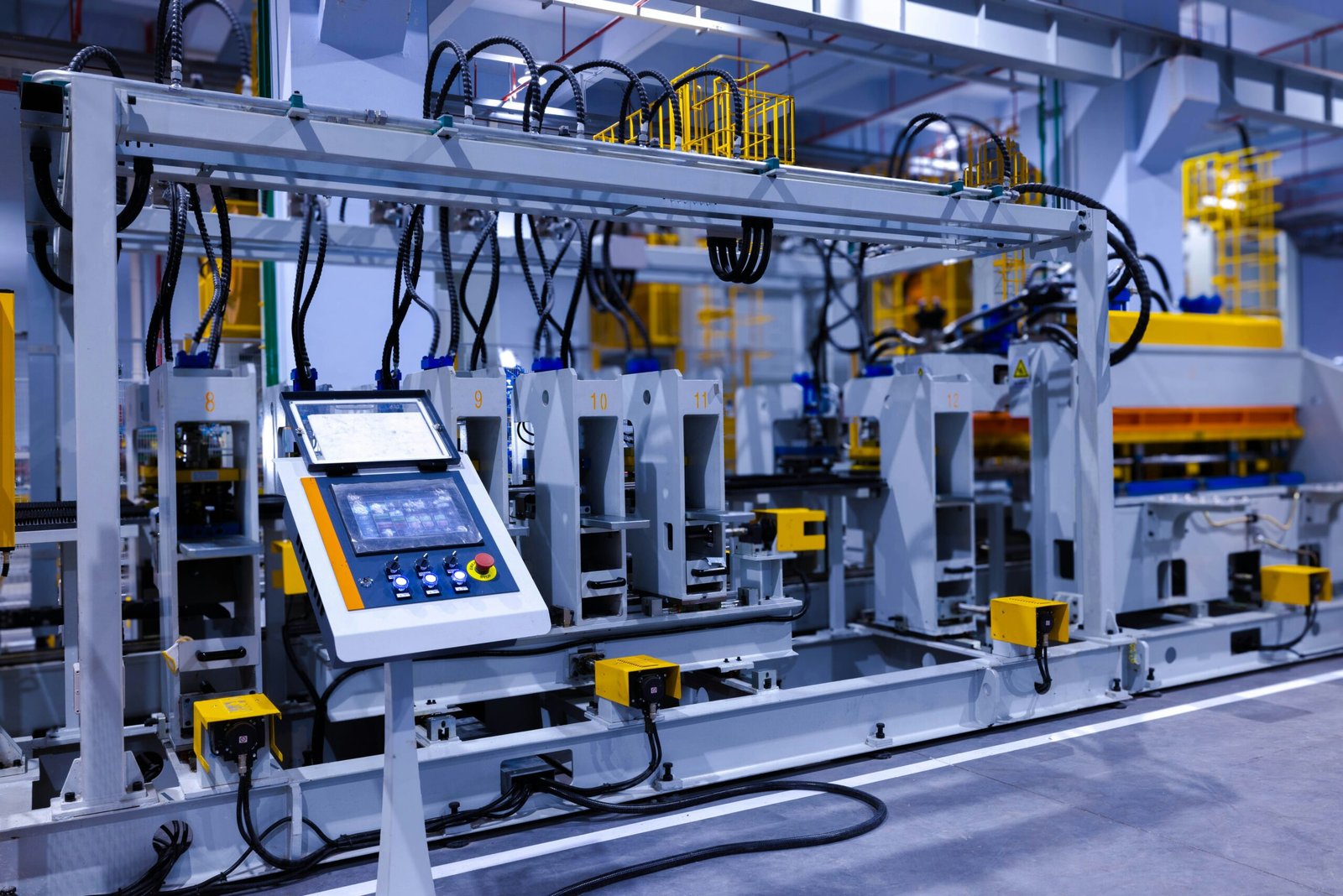
Plant floors in the Basin take abuse that office slabs never see: steel wheels, dropped tooling, hot fluids, chemical splash and equipment that vibrates twenty hours a day. A manufacturing plant in Odessa is usually a pre-engineered metal building or a tilt-wall shell wrapped around a production line, and the concrete is where the line is actually held in place. Get the slab wrong and the machines move, the drains back up, and the maintenance crew spends years patching.
We build the foundations, floor slabs, equipment pads, drains and surrounding pavement for plants and fabrication shops. We coordinate the concrete contractor's placement and finishing package with the firms doing earthwork and buried utilities, and we work with the plant engineer on the one thing that drives every decision: what the machines weigh, how they run and what leaks out of them.
We talk to the owner's maintenance people early. They know where the last floor failed and what they wish had been different, and that is better information than most drawings give.
Working inside an operating site
Many industrial jobs happen next to equipment that is already running. We bring a site-specific safety plan, hold a pre-task meeting with the owner's safety lead, and follow the plant's access rules for badges, lockout areas and hot work. Crews put on whatever protective gear the plant requires, and we keep concrete trucks, pumps and finishing equipment in marked routes away from forklifts and pedestrians.
Concrete work has its own hazards, including wet cement burns, silica dust from sawing and grinding, and heat illness during a summer pour. We use wet cutting or dust collection, run heavy placements in the cooler hours with water and shade on hand. The goal is simple: nobody gets hurt and the plant does not lose a shift because of us.
Starting with the equipment list
Our first step is to get the equipment schedule: weights, footprints, bolt patterns, vibration limits and fluid types. From that list we separate the plant into zones. A lightly loaded assembly bay needs one slab. A press line, a furnace or a heavy-machining cell needs an isolated foundation with its own reinforcing and often its own joint around it, so vibration does not shake the neighboring floor.
We lay out the pour sequence around the construction schedule. Equipment foundations go in first so the machine setters can begin while the rest of the floor waits for the building to close in. Floor slabs then follow, with embeds, sleeves and trench drains placed by the right trade before we pour.
Owners and contractors who call us
Industrial and manufacturing owners hire us directly for expansions, new lines and replacement floors. General contractors and construction managers hire us as the concrete package on new plants. Oil, gas and midstream companies use us for fabrication shops, coating buildings and equipment assembly plants that support field work across the Basin.
Each of them wants the same thing from a concrete contractor: someone who understands production schedules and does not leave a mess on the floor that affects the line start date.
Where plant concrete money goes
The biggest swing is the amount of heavy foundation work. A plant with ten lightly loaded machines costs far less than one with a single large press that needs a deep isolated block. Chemical resistance is next: coatings, sealers or special mixes add cost but may save a floor in a wash-down or acid area. Trench drains, sumps and containment curbs add forming and finishing time.
Site conditions matter too. Caliche, rock and uneven ground change the grading cost and the amount of base needed. We price what the geotechnical report supports and call out the line items that could move, so the owner knows where the unknowns are before the contract is signed.
Industry that already runs through Odessa
Industry in Odessa has a long history. The Odessa Petrochemical Complex, marked at 620 N. Grant Avenue, grew from a 1946 natural gasoline company with a 1957 synthetic rubber plant and a 1958 styrene plant, and was the largest of its kind in the world in the 1950s. That legacy left a labor force and a service base that still understand heavy industrial work, and it shaped the expectations of owners who build here.
A 330 acre Odessa rail facility with 29,000 feet of track, including two unit train loop tracks and ten ladder tracks, handles crude oil and frac sand, which tells you how much heavy freight this town handles. Plants near the rail yards need pavement that stands up to that kind of load, such as concrete paving with a proper base and tied joints.
What we pour for a plant
The list starts with building foundations and footings, then the main floor slab with joints and reinforcing sized to the process. Equipment pads and machine foundations come next, followed by pits, trenches and sumps. Outside, we place loading aprons, truck courts, fenced yard slabs, spill containment pads and walkways, all coordinated with the building schedule.
We also handle slab repairs inside operating plants: sawing out failed sections, installing dowels and patching with a mix chosen for fast return to service. Where the owner needs a chemical barrier or secondary containment, we coordinate with the coating specialist on surface preparation so the topping bonds correctly.
Site factors that change the plan
Loop 338 on the south side of Odessa is being studied for widening from two undivided lanes to a four-lane divided highway with an overpass crossing US 385. Plants on the south side should watch for how that changes access and truck routes during construction. We review driveway permits, delivery timing and haul routes before we mobilize.
Water is another factor. Odessa's surface supply comes from O.H. Ivie Reservoir, E.V. Spence Reservoir and Lake J.B. Thomas, with Ward County well fields supplementing it. That affects the mix water for large pours and the wash-down needs of a plant, and we plan around both with the project team.
Dust, wind and heat complete the list. Sand blows across forms, and an exposed slab dries fast. We use windbreaks, early starts and prompt curing to protect the surface.
Send us the equipment schedule
Equipment weights, bolt patterns, fluid types and the target start for machine setting are what we need. With those we can lay out foundation zones, call out isolation joints and give you a clear sequence.
Common Questions
How do you keep a machine foundation from shaking the floor around it?
We isolate it. The block gets its own reinforcing and footing, and a joint separates it from the neighboring slab so vibration stays put. The equipment supplier usually gives minimum mass and bearing numbers, and we build to them or above.
Can you work around an operating production line?
Yes, in zones. We set barriers, plan trucks and pumps around the plant traffic and schedule noisy or dusty work for downtime when possible. Concrete placement is often arranged for a weekend or a shutdown week.
What floor finish works best in a wash-down area?
It depends on the chemicals and temperature. Dense, well-cured concrete with proper slope to drains is the base. Sealers or coatings go on top only when the process demands them, and the owner should confirm compatibility before the work is specified.
Do you need the geotechnical report before bidding?
It helps a lot. It tells us what base thickness, subgrade treatment and groundwater conditions to expect. Without it we price allowances and say clearly what could change the number.
How long before a new plant floor can take equipment?
Concrete gains strength over weeks, but the equipment supplier or engineer sets the load requirement. We take cylinder breaks and share them so setting crews know the day they can start.