
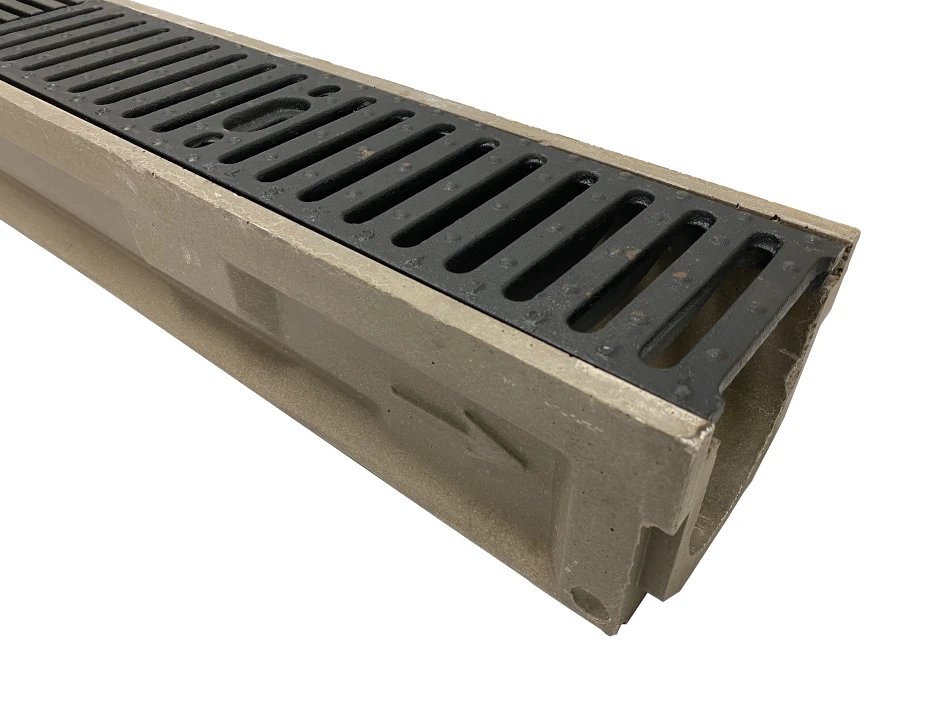
It does not rain much in Odessa, but when it does, it rains hard, and flat ground has nowhere to put it. A yard without drainage ponds at the gate, a wash bay without a trench drain floods the shop floor and a dock apron that slopes the wrong way sends water toward the door. Concrete drainage is how a site gives water a path.
We build trench drains, area drains, sumps, curbed gutters, valley gutters, flumes, swales and sloped pavement that carries runoff to a collection point. The work spans interior floor drains in shops and wash bays, linear drains across truck aprons and dock approaches, and open concrete channels around pads and containment areas.
The details decide whether it works. A grate that sits half an inch proud catches tires. A trench set a quarter inch too high leaves a pond. A joint left unsealed lets water under the slab and starts the next settlement problem. We lay out the slopes, set the drain bodies and pour the surrounding concrete as one connected job.
Drainage ties many jobs together
Drainage connects to containment pads and secondary containment, where the fluids need to be collected and held, and to concrete leveling and slab lifting, where poor drainage has already damaged a slab. It also supports equipment pads and machine foundations that sit in wash areas.
In new yards, drainage sets the slope of the entire pavement. We discuss it early with the civil engineer and the owner, since a late change of grade is expensive. A pond on a lot is also a place where sand settles and mosquitoes breed, and the owner ends up paying to clean it out.
Rain is rare and fast
Midland's airport record for 1991 to 2020 averages about 13.51 inches of rain a year, 24 days of 100 degrees F or hotter and 58 freezing mornings. That is a dry climate with sharp storms, hard sun and frosty mornings. A drain that works in a storm also has to survive baking and a freeze.
McCamey lives on oil, and big pipelines and tank farms serve the oilfields and ranches around it. Pipeline, tank and pad sites across the region need controlled runoff, and on many of them the owner must keep stormwater away from product handling areas.
What goes into a drain
The sequence is layout, excavation, bedding, drain body or channel form, reinforcing, concrete, finish and grate. For a trench drain, we set the channel to grade on chairs or supports, tie it to the reinforcing and pour a haunch of concrete along each side. The grate seats at the finished floor level, and the surrounding slab slopes toward it.
For open channels and valley gutters, we form the section, place steel where required and finish the surface with a light broom for flow. Edges are tooled and joints are sealed. Outfalls are set to the elevations from the drawing. At the outlet we place a splash apron or rock pad where the drawing calls for one, so the first big storm does not cut a trench in the soil below.
Slope, load and what flows through
The grate must carry the traffic. A forklift floor needs a grate rated for the wheel load, and a truck apron needs a heavy-duty frame that will not rock. What flows through matters too. Oil, wash chemicals and grit need different materials, and an interceptor or sump may be required before the water leaves the site.
Slope is a trade-off. A steep pitch drains well but is hard on forklifts and uncomfortable for people. A shallow pitch is easy to use but needs a close tolerance to avoid ponding. We lay out each run with a level and check the water path with a hose before the final finish when we can.
Drains go in before the slab
Drains are set before the surrounding concrete. Plumbing and electrical trades must finish their underslab work first, so we sequence with them and confirm elevations. Setting the drain body late means cutting the slab, which is slower and weaker.
Concrete is poured around the drain in one pass when possible. Cure follows, then grates and sealants. If a yard must remain in service, we divide the work into strips and keep one lane open while we rebuild the next. Weather gets watched too. A rare storm in the middle of a drain job can wash fines into trenches, so we cover open cuts with plywood or plastic at the end of each shift.
Mobilizing to Basin sites
Concrete trade partners travel to Odessa, West Odessa, Gardendale, Monahans and Andrews. Remote yards often lack storm sewers, so drainage must lead to a pond, a ditch or an on-site sump designed by the engineer.
Service companies and plant owners near the Odessa industrial and oilfield service district often need wash bays and drains, which is steady work for oil, gas and midstream operators and municipal and public works departments.
Drainage work and trade coordination
The same crew forms, reinforces, places and finishes the concrete, then sets drain bodies and grates and seals the joints. We coordinate trade partners for piping, plumbing connections, interceptors and the earthwork needed for deep channels.
We do not claim the underground utilities. If a drain leads to a storm line or a sanitary connection, the utility work is done by a qualified partner, and we agree on the invert and the connection point before we pour.
Drain layout and grade check
Send the grading plan or a sketch of the floor or yard. We will mark drain locations, check the slopes with a level and give you a pour order that works with the plumber.
Common Questions
How do I pick a trench drain grate?
Choose the grate by load class and opening size. Forklifts and trucks need heavy ratings, and people-only areas can use lighter ones. The drawing or the manufacturer's chart gives the rating. We install the model shown on the plans.
Is a trench drain possible in a floor that already exists?
Yes. The slab is saw-cut and removed, the drain is set, and new concrete goes back in with dowels. The floor around it is re-sloped if needed. It is a disruptive job, so we plan the work in sections to keep the shop running.
What slope does a yard need?
Enough to move water without ponding, typically a small percentage as set by the civil drawing. Flat sites need careful grading and layout. We follow the grading plan and flag areas where it conflicts with the field.
Do trench drains need maintenance?
Yes. Grit and trash collect and need to be cleaned out. Sumps need pumping. A neglected drain backs up and floods. We recommend a simple cleaning schedule when we hand over the drain.
Can drains be set inside a freezing or hot environment?
Yes. Materials are chosen for the range of temperatures, and the concrete around the drain is jointed to handle movement. Cold rooms need heat tracing or insulation, and hot wash areas need heat-rated frames. Tell us the use and we choose the right product.
Will a grate hold up under heavy trucks?
If it is rated for the load and seated in a proper frame, yes. Cheap grates bend or rock. We set frames in solid concrete haunches so the load goes into the slab and not the grate.