
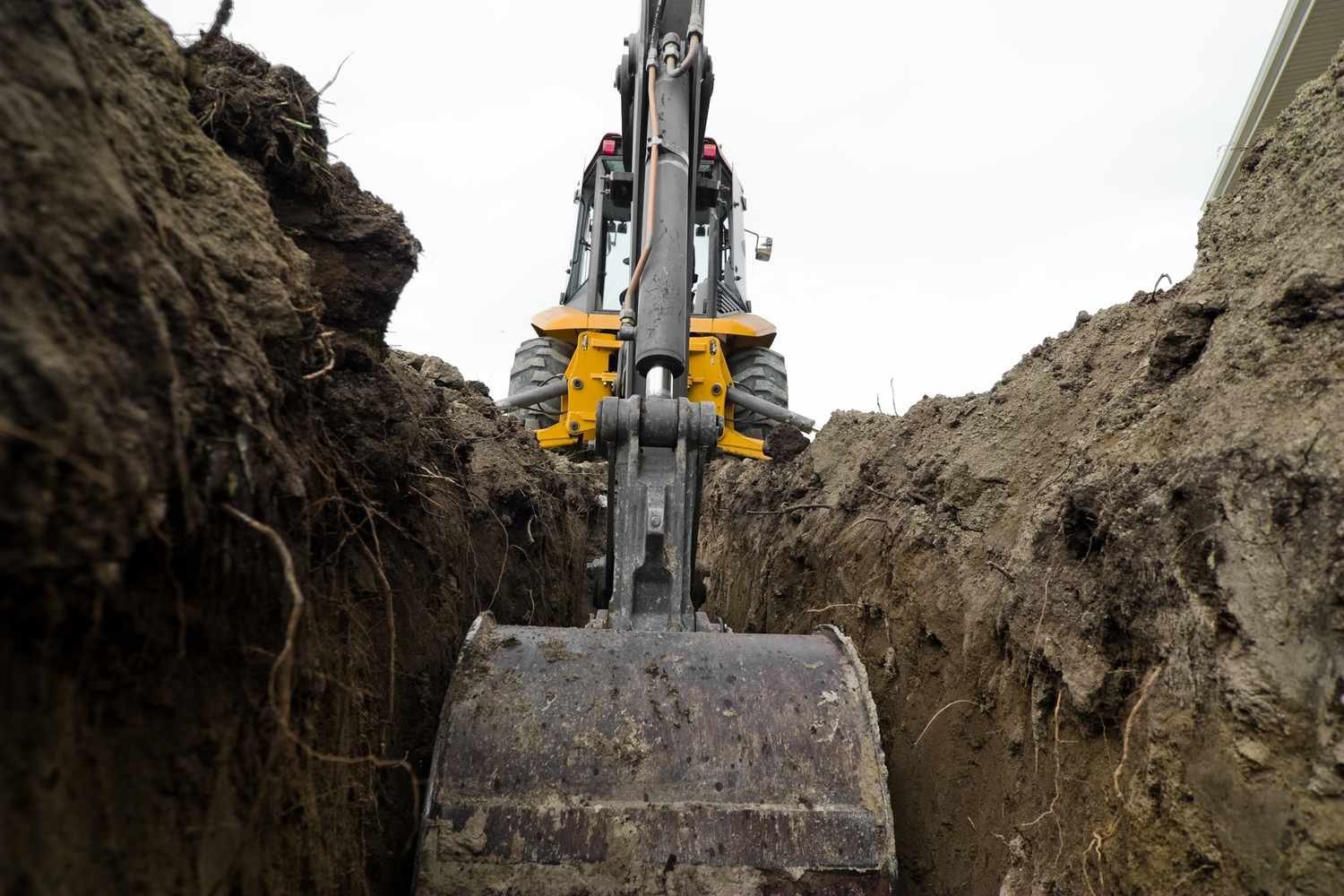
A trench is open for a day or two and then it is closed for the life of the pipe. The backfill is what that pipe lives in, and a line that settles two years later usually traces back to a lift that was dumped instead of compacted. Trench work looks simple, and it is the kind of simple that depends on the details nobody photographs.
The scope runs from the cut for water, sewer, storm, gas, electric and communication lines through bedding under and around the pipe, the layered refill above it and the surface restoration on top. Under a truck apron, a heavy-haul road or a plant slab, the backfill has to carry axle loads, so it is held to the same standards as the pad around it.
We coordinate trench crews and manage the sequence for concrete and utility projects in Odessa and the nearby Basin towns, from a single conduit run to a full site loop.
Who does what in the trench
The machines and operators that cut the trench belong to trade partners we schedule and supervise. The partners lay pipe, conduit and duct, and our field lead checks line, grade, bedding and cover against the plans before anything is buried. Concrete trade partners take over to place and finish the concrete that caps, encases or crosses the trench.
The advantage to the owner is a single schedule. When the duct bank, the encasement and the slab sit in one plan, the trench is not left open waiting for another trade.
Trenches from Odessa to the outlying towns
Our trench work centers on Odessa and the roads that tie it to nearby communities. State highways 18, 302, 703 and 115 serve Kermit, which lies seven miles northwest of Wink, so a line extension out that way often crosses highway right of way and needs the state's permission before the first cut. The US 385 and SH 302 corridor is the route most of that work follows.
Heavy vehicles account for about 22 percent of current SH 302 traffic, and traffic between US 285 and SH 115 roughly doubled from 2015 to 2019. A road that busy changes how we plan a crossing: bores and short open cuts with traffic control, scheduled for off hours when the permit allows.
From stake to compaction test
The method is the same on a small run and a long one. Locate and mark the line. Cut to depth and width with the soil's walls in mind. Place bedding that fits the pipe material. Lay the pipe to grade. Haunch and cover with specified material. Then backfill in lifts, compact each lift and test them at the intervals the engineer sets.
A trench under a slab or pavement gets flowable fill or select material to prevent settlement. We photograph the pipe in place before it is covered, since that record settles most later arguments about depth and bedding.
Buildings that need trenches
A distribution center needs storm, sanitary, fire and domestic water trenches in a pattern that runs around the slab and under the truck court. A manufacturing plant adds process piping, conduit banks and drain lines, often inside the footprint and before the floor is poured.
Offices, clinics and schools use the same trench types at a smaller scale. Whatever the building, the trench must be shut and compacted ahead of the slab and paving crews, which puts it early in the schedule.
Owners who buy trenching
Utilities and energy companies need trenches for service extensions, relocations and new gathering or distribution lines, with strict depth and cover requirements. They ask for sequence control, because a closed trench in the wrong order means reopening it.
Developers and owners of industrial and manufacturing sites want their trench work finished before the slab so the plant can set equipment. That puts the trench on the critical path, and we plan accordingly.
Sequencing the open ditch
An open trench has a clock on it. Weather, traffic, security and the owner's operations all push for it to be closed quickly. We schedule pipe delivery, bedding material, inspection and backfill so they arrive in order, and we do not open more trench than the crew can close that day. A line left open over a weekend is an invitation for a wall to slump or a truck to drive in.
Ector County averages 13.77 inches of rain a year, with a January minimum near 30 degrees F and a July maximum near 96 degrees F. Rain is rare, but when it comes it can flood a trench and undermine a wall. In summer we keep material shaded and moist enough to compact, and in winter we protect new concrete at the trench ends from frost.
Things that surprise trench crews
Soil changes quickly. Upton County soils are sandy loam with exposed limestone common, and caliche and limestone are the area's mineral resources, so a trench can pass from loose sand into rock in fifty feet. Sand walls collapse and rock walls stand, and the safety plan has to follow what is in the cut.
Old lines are the other surprise. Abandoned pipe, wire and unmarked services turn up in older yards, so we expose and identify what we find before cutting it. Wherever a cut conflicts with a live line we stop and call the owner. Wind-blown sand also fills an open trench overnight, so the crew checks the bottom and the bedding again before pipe goes in on the next shift.
What a trenching scope includes
A complete scope lists locates, saw cutting of existing pavement, excavation, shoring, dewatering if needed, bedding, pipe or conduit placement, backfill in lifts, compaction testing and surface restoration. It also lists who provides the pipe and who tests it.
It overlaps with conduit and fiber trenching and water main installation, which carry their own testing and inspection steps. We list each so the price compares cleanly with other bids.
Share the utility plan before the slab date
Send the utility plan and the pour schedule, and we will lay out the trench sequence, name the open points and quote the run by the foot with allowances for rock and rework.
Common Questions
What material goes around the pipe?
The specification names it. Flexible pipe usually needs a granular bedding and haunching, such as sand or fine crushed stone. Rigid pipe may accept screened native soil. We use what the engineer lists and keep a delivery ticket for it.
Why test every lift of backfill?
Because a trench is deep and narrow, and a loose layer low in the trench cannot be seen from the surface. Density tests at set depths prove each layer, and a failed test is reworked before more fill goes on.
Can a trench be cut through a new slab?
It can, but it is expensive and creates a cold joint. It is cheaper to trench before the slab and sleeve the lines. When a cut is unavoidable, we saw it clean, restore the base and patch the slab to match.
How is an unmarked line handled during trench excavation?
We stop work in that area, expose the line by hand, photograph it and notify the owner and the engineer. Nothing is cut or moved until someone with authority confirms what it is.
Do you handle traffic control for crossings?
We coordinate the traffic control plan and the permits for roadway crossings, using a licensed flagging or barricade provider. Highway crossings often need the state's approval, which can add lead time to the schedule.