
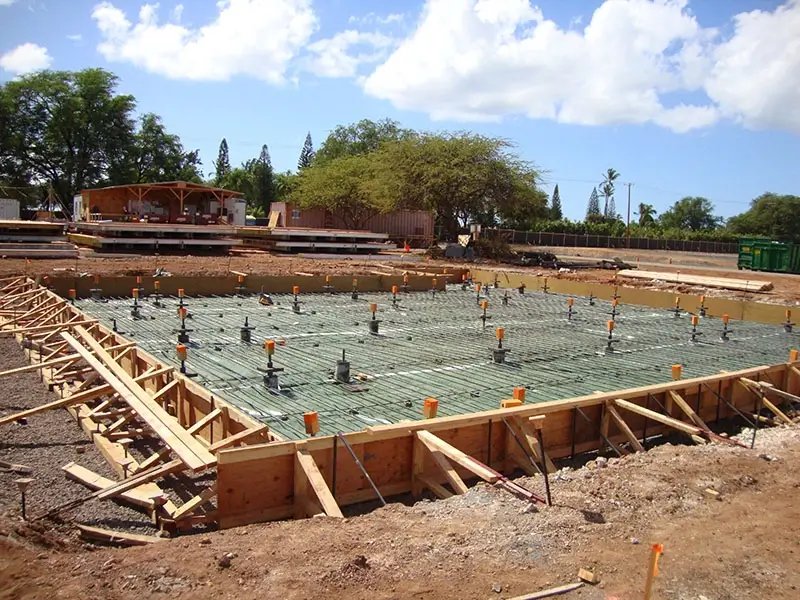
A drilled pier is a hole filled with steel and concrete, and what matters is what the hole passes through. West of Odessa the profile can include loose sand, caliche layers, and harder zones that slow the auger. The geotechnical report says what to expect, and the pier length, diameter and bell, if any, come from the structural engineer. Our job is to put the shaft where the drawing says, keep the sides intact and fill it cleanly.
Piers show up on Basin jobs more often than owners expect. Pipe racks and equipment skids use them for uplift and lateral load. Metal buildings sometimes need them under heavily loaded columns. Light poles, sign structures, flare and stack supports and truck-scale pits all ride on drilled shafts when the surface soil is soft or the load pulls up as much as it pushes down.
We coordinate trade partners for the drilling and handle the cage, the concrete and the finish. That split keeps responsibility clear. The driller is accountable for the hole, and we are accountable for the steel, the placement and the top elevation the next trade builds on.
Owners who set structures on shafts
Operators and service companies set racks, tank supports and compressor skids on piers when the load is high or the soil is soft. Plant owners in industrial and manufacturing sectors use them for crane rails, stacks and tall equipment. The same method applies to pipe supports for oil, gas and midstream work.
Odessa's petrochemical complex started up in the late 1950s as an integrated synthetic rubber plant, among the first big industrial installations in the area. Structures of that kind, and the units built around them since, are the reason heavy foundations are a normal part of local practice.
Open holes, augers and cage lifts
An open shaft is a fall hazard for people and equipment. We cover or barricade each hole when the rig is not working it, and we keep the spoil pile back from the edge so the wall does not load itself. Anyone setting a cage works from a position clear of the hole and out from under the lift.
Utilities come first. Before the rig moves in, the site is located and marked, and we confirm which lines run near the shaft layout. Overhead lines get the same attention when a crane sets a long cage. The pump truck and the ready-mix trucks need a firm route to the shaft, and we place mats if the ground will not hold them.
Soil, water and the drilling log
The driller's log is the record of what the shaft actually met. If the log differs from the geotechnical report, we stop and call the engineer. A hard layer may require a change in length or the method of drilling, and a pocket of loose sand may require a casing or a slurry.
The Odessa Meteor Crater, about 3 miles south of I-20 at Exit 108 and about 550 feet across, has filled with soil and debris from an original depth near 100 feet. It is a reminder that the ground out here can change over short distances, and it is the reason we want soil information at each structure, not one report for the whole site.
Shaft tolerances are tight on the things that matter. Plumb, location and top elevation are checked before the cage goes in and again before the concrete sets. Bolt templates for the base plates are set and surveyed before the pour so the base plate fits the first time.
Where the rig and the crew mobilize
Concrete trade partners travel to Odessa, West Odessa, Gardendale and the plants and yards along the highways around them, and out to Monahans, Andrews, Kermit and other Basin towns. Piers for a shop in West Odessa and a rack at an Odessa industrial and oilfield service district follow the same steps, but the site access and the water supply for concrete trucks do not.
Drive time for the driller and the concrete trucks matters. A long haul in summer shortens the working time of the mix, so the supplier gets a call about retarder and delivery windows before the date is set. On a windy day we also keep the spoil pile wetted so blowing sand does not drift back into open shafts.
Loop 338 and heavy industrial growth
TxDOT has proposed turning roughly five miles of Loop 338, from East Yukon Road up to US 385 North, into a freeway with frontage roads and a 10-foot shared-use path, with new crossings at Grandview, 87th and 100th. Overpass bents, sign structures and sound or lighting supports all depend on drilled shafts, and the same corridor feeds the industrial parcels that need their own foundations.
That kind of highway work shapes where owners build next. Parcels near the loop and near the I-20 and Loop 338 corridor draw yards, shops and fabrication buildings that need dependable foundations and short delivery runs.
Drill day, pour day, cure day
A shaft is drilled and filled the same day. Open holes in sand do not wait, and the reinforcing cage has to be ready before the rig arrives. We plan deliveries so the cage, the pump and the first truck reach the shaft within an hour of the auger lifting out.
After the pour we protect the top and hold off loads until the test breaks agree with the specification. Grade beams or pedestals tied to the piers follow, and they have their own forms and cure, as covered in grade beams and rebar placement.
Pier layout and drilling window
Send the foundation plan and the boring report. We will review the shaft schedule, line up the driller and give you a pour sequence you can hand to the yard manager.
Common Questions
How deep do piers go in the Odessa area?
Depth is set by the structural design and the soils report, never by guesswork. Shafts for light poles may be a few feet deep, while heavy equipment piers can run much deeper. We build to the drawing and report what the rig meets.
What happens if the auger hits hard material?
The driller notes the depth and the resistance, and we contact the engineer. Options include switching tools, changing the shaft length or shifting the location a short distance. The change is written down before the work continues, since the foundation is judged by the design.
Can you pour a shaft with groundwater in it?
Standing water changes the method. The concrete is placed through a tremie pipe so it pushes the water out and does not wash apart. The engineer should approve that approach first and may require a slump and mix change.
How soon can steel or equipment go on top of the piers?
Wait for the strength result named in the specification. Cylinders from the pour are broken on a schedule, and the engineer signs off on the number. Setting a load early risks a crack at the head of the pier.
Who is responsible for locating utilities before drilling?
The owner and the contractor share it. We request the locates, review the markings and confirm clearances against the shaft layout. If the plans show a pipeline or cable near the drill point, we ask for a hand-dug exposure first.
Are the cages built on site or delivered?
Either works. Delivered cages save yard space and time on a tight lay-down area, while on-site assembly lets us adjust to a field change. Long cages need a crane and a clear swing, so we check the lift path and the overhead lines when we choose.