
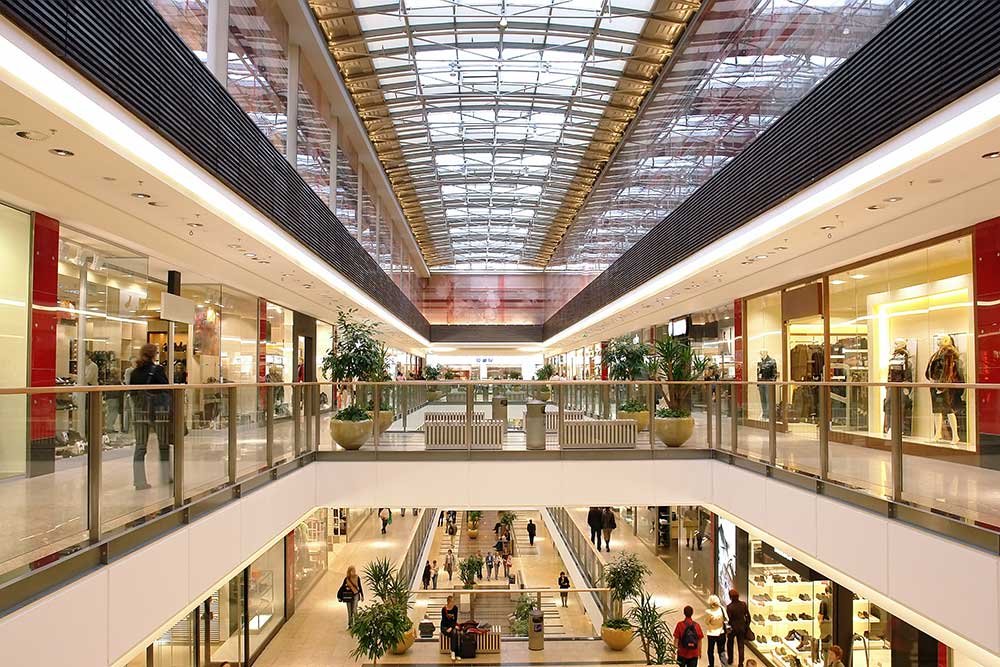
A shopping center is judged first by its parking lot. Shoppers see the paving before they see the storefront, delivery trucks wear it down every morning, and a cracked drive lane tells a prospective tenant something about the landlord. We build the concrete for strip centers, pad sites and larger retail projects in Odessa and Ector County, including the building slabs, the lot, the curb and gutter, the sidewalks and the dumpster pads.
Retail work moves on a tenant calendar. A national chain may need a shell by a fixed date, and a local owner may open one suite at a time. We build in phases when the owner wants, keep drive lanes open for the stores that are already trading, and coordinate the trade partners for utilities and earthwork so the lot is not torn open after it is paved. The lot itself is covered in detail on our parking lot concrete page.
Crews on the slab and the lot
Retail concrete packages cover footings, floor slabs, aprons, sidewalks, curbs and paved areas, including their placement and finishing. A strip center needs firm placement dates agreed with the concrete partner. The slab for the next suite cannot wait for a last-minute staffing decision, and a missed afternoon in July means a rescheduled pour the next morning.
Trade partners we coordinate own the utilities and the earthwork, and we leave both to them, but we manage the order: underground utilities first, then base, then the slab, and finally the paving. The result is one concrete lead who is on site every day and knows which sleeve crosses which trench. When a sewer tie-in changes, the curb and gutter layout can change too, and the single contact keeps the two aligned.
Phasing a center around tenants
The usual retail sequence is pad and utilities, then building slabs, then the lot, with sidewalks last. The reverse is tempting when a major tenant demands early access, but the lot is the most exposed part of the project and the first thing that construction traffic damages. We recommend leaving the final lift of paving until the tenants' trades have finished their heavy deliveries.
In Odessa, schedule is also weather. Summer afternoons are for resting equipment and early mornings are for pours, which means a typical placement starts before sunrise. We order trucks in a rhythm that keeps a finishing crew busy but not overwhelmed, and we hold a curing blanket on site for every placement. If a storm threatens, we can protect a fresh pour with plastic and keep the schedule moving the next day.
How retail sites sit on the highway grid
West Odessa is bounded by Interstate 20 on the south, State Highway 302 on the north, FM 866 on the west and the city of Odessa on the east. Its lots draw traffic from several directions, and exits 104, 108, 112 and 113 give the community north of the interstate its access. Retail owners there think about visibility from the exits and the turn lanes at the feeder roads, and we build driveways and aprons to the TxDOT or county detail where they meet public roads. Our West Odessa work follows those exits.
Across the Basin, the pattern repeats. Midland's grid layers Interstate 20 and Business I-20 (Wall Street, Front Street and the old US 80) with Loops 40, 250 and 268 and State Highways 158, 191 and 349. Retail sites cluster at those junctions, and developers with land in both cities often bid both together. Water adds a quiet constraint, because Odessa's water starts in lakes along the Colorado River, arrives through the Colorado River Municipal Water District, and is topped up from wells in Ward and Ector counties, and the water line extension to a pad site can decide the schedule.
Owners and developers we work with
Retail concrete is paid for by many kinds of owners. Some are local families who develop one center at a time, some are investment groups that hold several, and some are national tenants building a standalone store on a pad. We also work with homebuilders and multifamily developers who add a small retail component at the front of a residential project.
Each owner type asks different questions. A one-center developer wants a fixed lot and a clear schedule. An investor wants a pavement that will not need repair soon. A national tenant brings a prototype drawing and expects the slab to match it. We read the drawings first, flag conflicts between the prototype and local soil conditions, and propose a change through the architect rather than build something that will fail.
What goes into a retail concrete package
The package normally includes building footings and slabs, truck docks and ramps, dumpster pads, sidewalks, curbs, drive lanes, parking stalls and accessible routes. We pour the pavement in panels with sawn joints that match the stall lines where possible, since a joint running through a parked car looks worse than one at the stripe. Reinforcement is set to the civil drawings and the thickness varies between the stall area and the truck lane.
Drainage is a large part of retail pavement. Wink grew from the oil found in 1926 in the Hendrick oilfield in Winkler County, and small commercial centers in towns like it often sit on flat, dusty ground with few storm sewers. In those places we rely on trench drains and concrete drainage or on carefully graded valley gutters to move water to the street. A lot that drains slowly does not just look bad. It undermines the base.
Retail formats we build for
Small strip centers need modest slabs and long frontage sidewalks. Larger centers with a major tenant need heavy truck lanes behind the stores, multiple dock positions and wide, durable pavement. A restaurant pad needs a grease interceptor vault and a thick drive-through lane that handles stopped idling vehicles. We price each layout separately.
Retail is often next to other uses. A center beside a hotel may share its parking field with it, and a storage facility behind a strip center may share a drive. We coordinate those boundaries with the neighboring contractors. See our work on hospitality hotels and self-storage facilities for the patterns that appear on shared sites.
Keeping shoppers and crews apart
Phased retail jobs often run next to open stores. We fence the work zone, mark pedestrian routes with barricades and signs, and schedule noisy sawing or breaking for the hours when the center is quiet. Concrete trucks enter and exit by a route agreed with the property manager, with a flagger during peak delivery hours.
The trade is hard on the body in Basin heat. Crews take scheduled water and shade breaks, and we start early and wrap up before afternoon heat peaks. Slip and trip hazards are controlled by covering open forms and trenches at night. Wet concrete burns skin, so washing stations are set at the truck. These details are dull, but a retailer who has seen a customer step into an open trench will ask about every one of them.
Talk to us before the lot is drawn
Send the site plan, the tenant mix and the date the first store plans to open. The concrete partner lead can walk the property with you, point out drainage and phasing issues, and suggest where the joints and drive lanes should fall. Call or use the form.
Common Questions
How thick should the parking lot be?
Passenger stalls can be thinner than truck lanes, and the civil engineer sets both from traffic and soil strength. Truck lanes behind the store usually need extra thickness and doweled joints. We check the spec against actual delivery traffic and flag a mismatch before the pour.
Can you keep the center open during construction?
Usually yes, with phasing. We close sections of the lot in turn, keep at least one entrance clear and coordinate with the property manager. It takes more planning and slower production, so the price reflects it.
When should sidewalks be poured?
After heavy deliveries and building work are done, or they get chipped. We tend to place them last, with accessible ramps and tactile surfaces set to the drawings.
What about a restaurant drive-through lane?
It needs thick, reinforced concrete because vehicles stop and idle on the same spot all day. We also detail the joints to resist grease and heat from the exhaust.
Do you pour concrete for a single pad site?
Yes. A pad site is a small project with the same issues as a large one, and we handle it by sharing the mobilization with neighboring work when we can.