
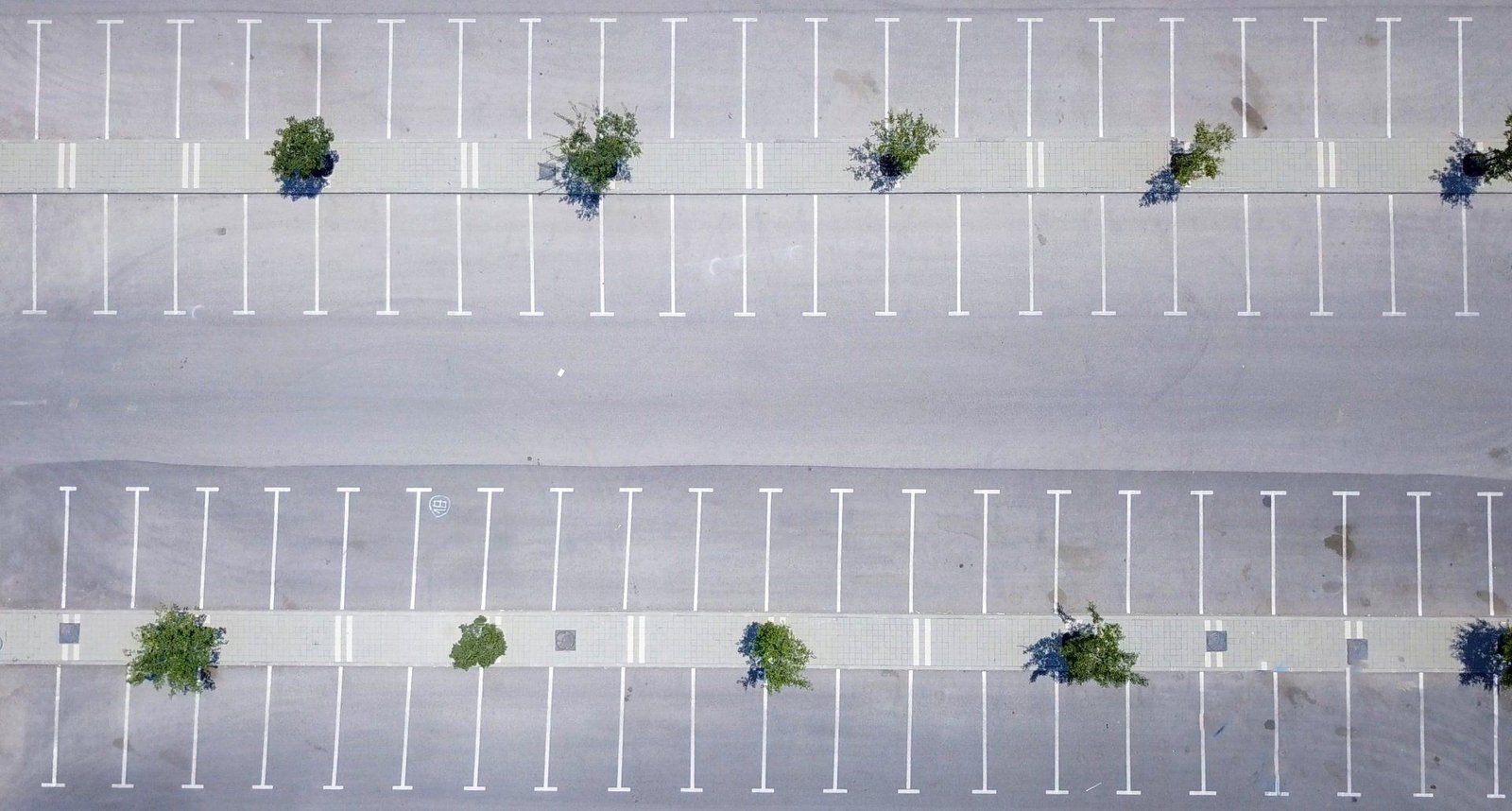
A parking lot is the first thing a customer sees and the last thing an owner thinks about, until it fails. In Odessa, lots take delivery trucks, fuel haulers, dumpster service and the ordinary traffic of a town that drives everywhere. Asphalt works for many of them, but concrete lasts longer in heat, resists oil and holds its shape under trucks that stop and turn.
The design questions are practical. Where does the water go? How many joints will the lot have, and where will they fall relative to the stalls? What happens at the dumpster pad and at the loading door, where trucks do the most damage? A lot that answers those questions on paper tends to last, and one that guesses at them tends to crack and pond.
Concrete Contractors of Odessa pours parking lots and drive lanes for commercial, medical, institutional and industrial owners. The concrete specialists handle the forms, placement, finishes and curing. We coordinate those operations with the trades responsible for preparing subgrade, installing utilities and completing site grades. The result is a lot that drains, holds paint, and keeps its edges.
Parking built around real destinations
Odessa's parking demand follows its employers and its freight. A 330 acre rail facility served by Union Pacific, with 29,000 feet of track, two unit train loop tracks and ten ladder tracks, handles crude oil and frac sand, and the trucks that serve it need a place to stage and park. Lots near rail, near truck routes and near major employers all see more heavy traffic than a typical retail lot. That changes the design from the first sketch: thicker sections at the entries, dowelled joints where trucks turn, and a clear separation between customer parking and the lane the tractors use.
Weather matters too. Midland International Airport's 1991 to 2020 normals count 24 days at or above 100 degrees, 58 mornings at freezing or colder, and about 13.51 inches of precipitation in a year. A lot has to take both heat and a few freezing mornings, and occasional hard rain. Concrete tolerates that range well when joints are cut on time and sealed. A lot that is poured in July moves differently from one poured in February, and we adjust the saw timing and the joint seal to the season so the panels have room to move.
Owners who build concrete lots
Commercial developers building small centers want parking that photographs well and lasts. Commercial developers also care about phasing, since tenants open before all of the lot is finished. Healthcare and education owners need accessible stalls, safe pedestrian paths and drainage that keeps patients and students dry.
Industrial owners and trucking operators buy concrete lots for trailer parking, employee parking and service areas. A trailer with its landing gear down puts a huge point load on a small patch of pavement. A properly designed section of concrete paving holds that load without a pad or a plate, which is why trucking yards go to concrete when they can afford it. Dumpster pads and fuel truck stops get the same treatment, with extra thickness and reinforcement where the heaviest axle stops.
Buildings and their lots
The lot design depends on the building it serves. A retail shopping center needs tight stalls, clear drive aisles and a firm section at the delivery dock. A medical office needs accessible stalls near the entrance and smooth routes. Schools need bus lanes and drop-off areas that handle heavy vehicles.
Warehouses and shops need trailer maneuvering room and dock approaches. Hotels and restaurants need generous entry drives and clean curb returns. We ask which vehicles come and go, how often, and when they come, then build the cross-section and joint pattern to match. The UTPB main campus in Odessa covers 644 acres, and the lots around the University of Texas Permian Basin area show how many different traffic patterns one owner can have.
Keeping a working lot safe
Most lots we pour are next to buildings that stay open. We split the work into phases, keep one entrance clear, and put barricades and signs where customers walk. Mixer trucks and pumps get a marked route that avoids pedestrian paths, and the site lead gets a daily briefing.
Accessible stalls and routes are never closed without an alternate path. If a crosswalk or ramp is torn out, a temporary route goes in first. Fresh concrete is a trip hazard and an attraction for curious feet, so we use tape, signs and an attendant at busy openings. Crews wear high-visibility clothing, and heat precautions apply in summer. We also keep the water truck moving on dry days, so blowing sand does not coat the forms or the freshly placed slab, and we sweep the subgrade just ahead of the pour.
Accessibility, drainage and permits
Parking lots fall under accessibility rules for stall counts, slopes, signage and routes, and they fall under local drainage and site plan requirements. The permit office reviews the plans, and inspectors check subgrade, reinforcement and ramps. We keep the approved plans on site, mark changes and ask for written approval when we propose a modification. The slopes on ADA ramps and accessible routes follow the approved set, checked with a level.
Drainage often draws the most attention from reviewers. Slopes toward inlets, trench drains and swales have to meet minimums, and detention may be required for larger lots. A drainage detail like a concrete trench drain can solve a spot where grade cannot be achieved. We check the grades with a laser or total station before and after the pour.
Send the site plan and the traffic mix
Tell us the number of stalls, the delivery schedule and the building types on the site. We can mark the lot with joint lines and noted dumpster areas, and give you a price per section.
Common Questions
Which holds up better in a lot, concrete or asphalt?
Asphalt is cheaper at first and works for light traffic. Concrete costs more up front, resists heat, oil and turning loads, and needs less maintenance. Lots with trucks, dumpsters or fuel deliveries are good candidates for concrete.
How are stalls striped on concrete?
Once the surface has cured and been cleaned, paint or thermoplastic goes on. Concrete holds paint well when the surface is free of curing compound. We coordinate with the striping contractor on the date and on the surface preparation.
What joint pattern works for a lot?
Joints are cut in a grid sized to the thickness, usually lining up with stall lines or light poles where possible. The engineer sets the spacing. We saw the joints early so cracking follows them.
Can you pour a lot in phases while the store stays open?
Yes. We divide the lot into sections, keep an entrance and accessible stalls available, and sequence the pours so customers always have a path. Phasing adds mobilization cost, which we show in the bid.
Will a concrete lot get hot?
Concrete reflects more sunlight than dark asphalt and generally stays a little cooler. It still gets hot on summer afternoons, but it will not soften or leave tracks.
What do you do about low spots that hold water?
We find them before the pour with a level run across the subgrade and forms, and we correct them while the base can still be adjusted. After the pour, a flooded test with a hose shows any birdbath. Small ones can be ground, and large ones can be cut out and replaced at our cost when the error is ours.