
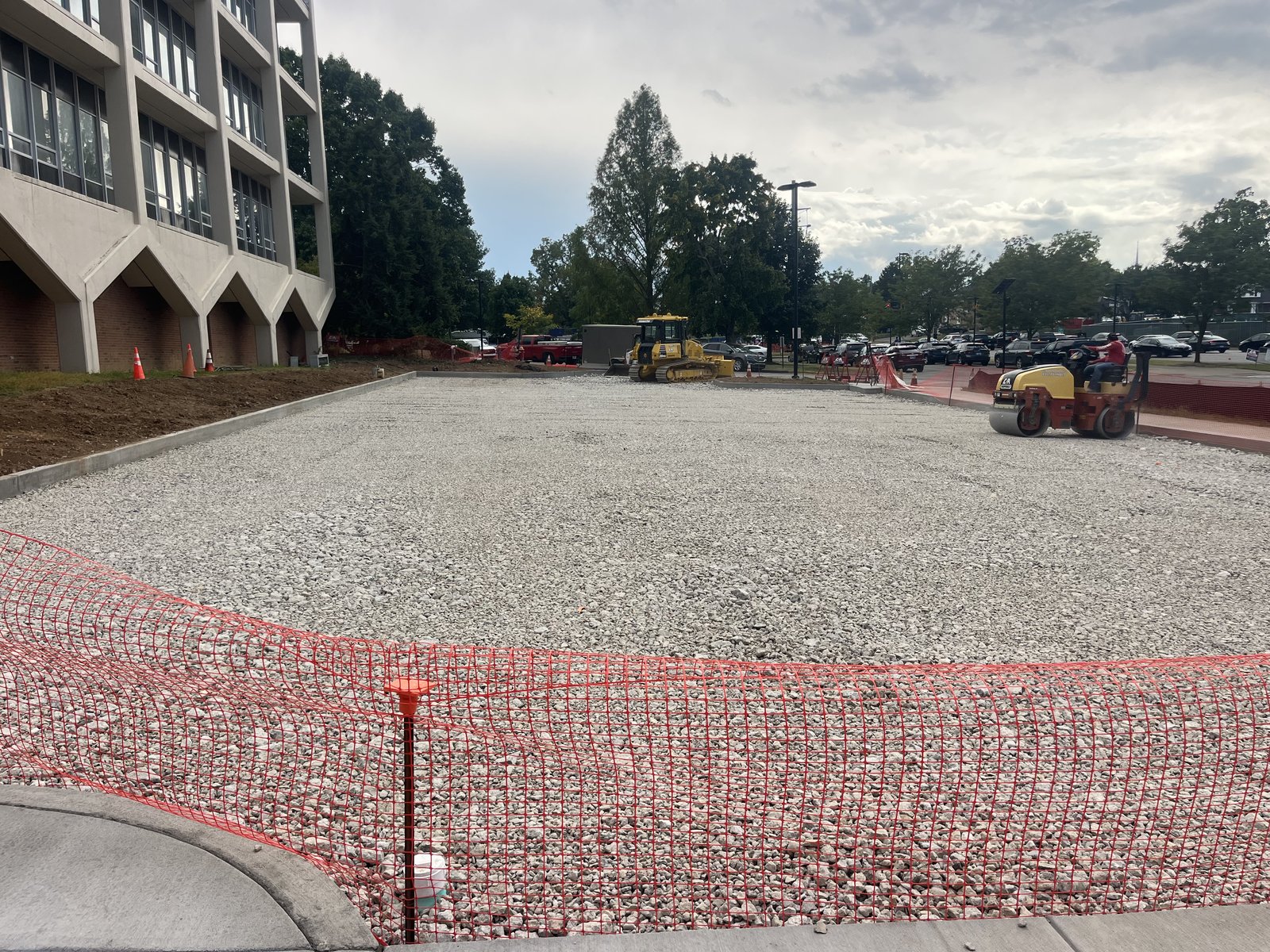
A heavy-haul road fails from the bottom up. The wearing surface may look fine for a season while the subgrade underneath pumps water, rolls under the wheel path and slowly lets the base spread. By the time the cracks show, the repair is a rebuild. The subgrade is the part of the road nobody sees after the day it is covered, and it carries everything that drives over it.
Road subgrade preparation brings the native ground to a uniform, stable, properly shaped surface before base and pavement are placed. It includes stripping, cutting and filling to the road profile, proof rolling, replacing or treating weak soil, compacting to the specified density, shaping the crown and cross slope, and setting the grade for the pavement section.
We plan and coordinate subgrade work for lease roads, plant drives, truck routes and yard lanes around Odessa, built for axle loads that ordinary streets never see.
Subgrade comes first, and it has to wait for nobody
The subgrade sets the earliest start for the base and the paver. Treated or replaced soil needs time to cure or settle, density tests have to pass and the finished grade must be signed off. We lay out the sequence in stations or segments, so one segment can be tested while the next is cut, and the paving crew follows without gaps. Hold points are written into the plan, so a segment that fails a test is reworked while the crew is still there, and not after the equipment has moved to the next job.
Utilities complicate it. Water, sewer, storm and conduit crossings have to go in before the subgrade is finished, or they will be cut through it later, so we get the utility drawings early and place the crossings in the same sequence as the grading.
Split of work
The grading, hauling and compaction are performed by earthwork partners we coordinate. We manage the staking, the testing, the sequence and the handoff to the paving contractor. When a road includes concrete elements such as curb, gutter or a concrete apron, concrete trade partners place and finish them over the prepared subgrade.
Keeping one coordinator on the whole sequence prevents the usual problem of a subgrade that passed on Monday, was cut by a trench crew on Tuesday and is paved on Wednesday.
Services that tie to the road
Subgrade work connects to several other services. Asphalt paving base preparation follows it directly. Lime and cement soil treatment is the usual way to stiffen weak subgrades over long distances. Storm drain installation fits into the road corridor, and drainage structures need to be set before the grade is final.
Where the road ends at a building, truck courts and dock aprons continue the same subgrade standard onto concrete.
What drives subgrade cost
Length, width and soil type set the price. A long road on good caliche subgrade is cheap per foot. A shorter road on soft, wet or organic soil costs more, because the weak layer must be removed or treated. Import of select fill or base drives the cost further, and trucking dominates when the source is far away.
We recommend that owners ask for alternate prices: treatment versus replacement, and a base with and without geogrid. The cheapest option varies by soil, and a short test strip can show which one performs. Owners who run oil, gas and midstream operations often ask for a priced alternate, since they know which of their roads see the heaviest trucks.
Standards that apply
Public roads follow agency specifications that dictate material, density and test frequency. Private lease roads and plant drives follow the project specification and the geotechnical report, and heavy-haul designs often exceed public standards because loaded trucks are heavier than legal highway weights.
Work inside a public right of way needs a permit, traffic control and sometimes utility locates from several owners. Work that crosses a drainage way needs a permit from the city or county. We keep the permit file with the daily logs. Municipal and public works owners expect the test reports and the as-built grades turned over at the end, and we organize the file for that from the start.
Roads the Basin runs on
Andrews County has produced over 1 billion barrels of oil since the first well was drilled in 1929, and oil remains the city's economic foundation. That history built a network of lease roads and pad roads whose subgrades carry water trucks, frac sand haulers and rigs. A road there is judged by the load it takes every week.
The major corridors are being rebuilt too. TxDOT's I-20 widening in Midland and Odessa is a $424 million program that began in 2024, adds main lanes and new interchanges, converts frontage roads to one-way operation, and is expected to be fully open in 2028. Private roads that connect to that system have to match its grades.
Reach
Gardendale is about 14 miles north of downtown Odessa, the county seat, and is part of the Odessa metropolitan statistical area. We mobilize to Gardendale and along the northern routes for yard roads and approach lanes, and to the west and south for similar work.
Plans that combine a road with a pad are common in the Odessa industrial and oilfield service district, where one contractor can prepare a pad, the road that reaches it and the apron between them.
Roads that serve buildings
A distribution center relies on a road that carries trailers from the highway to the dock without breaking. A government or municipal facility needs public-facing roads that follow agency standards. Odessa-Schlemeyer Field sits within city limits as a general aviation airport, and Midland International Air and Space Port is the larger field midway between Odessa and Midland. Access roads and service lanes at airports like those are built to the same discipline.
In each case, the owner is buying a surface that keeps its shape. Everything below the pavement decides that, and a road that is pre-treated and well drained carries trucks for years with only surface maintenance.
Give us the haul route and the axle loads
Send the road alignment, the expected truck weights and the soil report. We will recommend the subgrade treatment, set the testing plan and price the road by the foot with options for soft ground.
Common Questions
How do you check a road subgrade?
With a proof roll, density tests on each lift and a survey of the finished grade. We also walk the line after rain to see where water stands, because standing water points to a grade or drainage error.
What crown and slope do roads need?
Plans set it. A typical crown or cross slope is a fraction of an inch per foot, enough to shed water without making trucks lean. We stake the profile and hold the tolerance on every station.
Is geogrid worth it?
On weak soils with heavy traffic, it can reduce base thickness and slow rutting. Its value depends on the soil and the load. The engineer decides, and we price it as an option when asked.
Can a road be built in stages?
Yes. The subgrade and base can be done first, then paving later when funds or schedule allow. A staged road needs drainage and protection against traffic damage in the meantime.
What is the most common failure?
Water. Poor drainage, softened edges and unsealed shoulders let water into the subgrade, which loses strength fast. Good drainage design and clean ditches matter as much as the thickness of the pavement.