
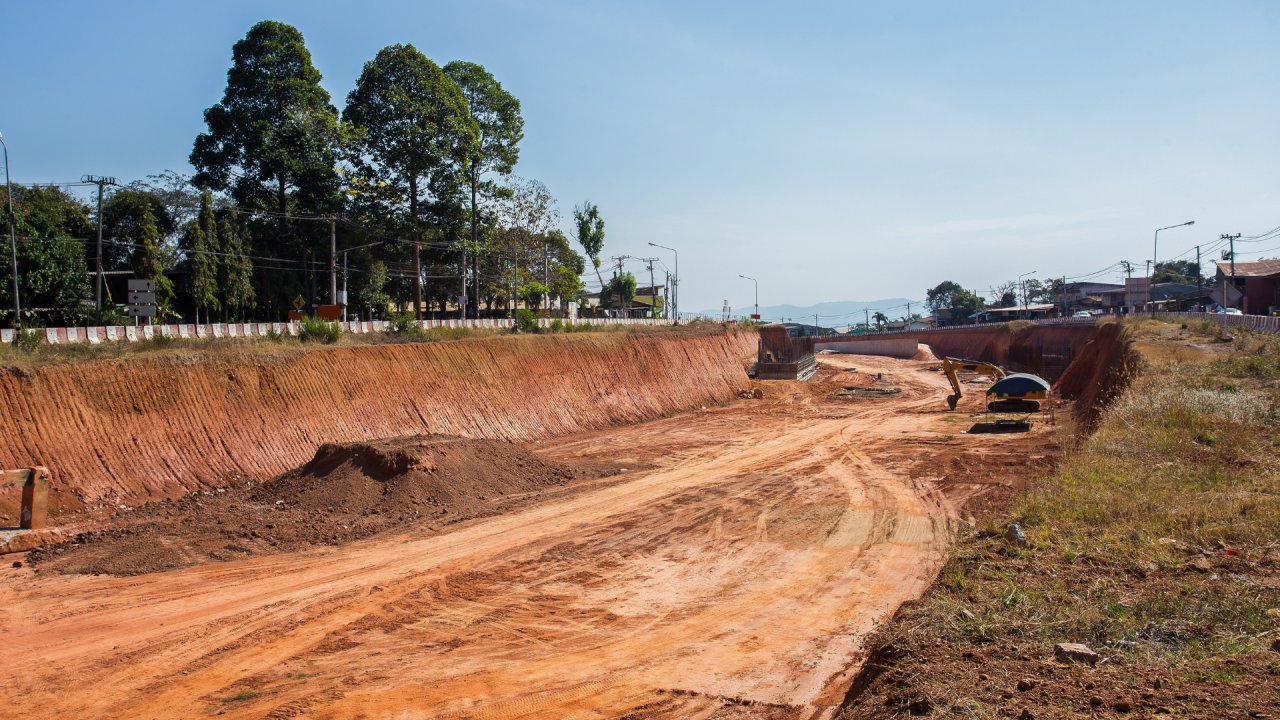
A slab that is two inches off at the edge of a service yard does not stay a cosmetic problem. Water collects there, trucks cross it a hundred times a day, and the joint at that spot is the first one to spall. Fine grading is the last pass with the blade before concrete or stone goes down, and on a yard or shop pad it decides whether the finished surface drains the way the drawings say it will.
The work is trimming a compacted subgrade to its final elevation, often to the nearest hundredth of a foot or two, using laser or GPS-guided graders, a skid steer for the corners and a hand crew for the spots a machine cannot reach, all run by the earthwork partners we coordinate. It follows the bulk earthwork and the compaction testing. It comes right before the form crew, the stone base and the pour, which means it must be done late enough that rain and traffic have not undone it and early enough that the pour crew is not waiting.
We coordinate the trimming of subgrades for shop floors, truck aprons, containment pads and parking areas around Odessa. This page lays out what gets trimmed, how weather and wind-blown sand change the schedule, and what moves the price.
Pads we trim, by building
A warehouse floor wants a subgrade that is flat in every direction, because a floor slab rides the surface under it and every dip shows up as thickness variation. A warehouse pad gets graded to a tight tolerance and then proof rolled again before the base stone. A truck terminal wants slope instead. The dock apron drops away from the building, the lanes fall toward inlets, and the whole plan is a set of planes that meet at crowns and valleys. The grading crew we coordinate stakes those planes and cuts to them.
A truck terminal or cross-dock pad is the harder trim, since the planes are many and the tolerance for ponding is close to zero.
Timing the last pass
Fine grade is perishable. A rain on a trimmed subgrade softens the top inch, and a week of truck traffic from other trades rips ruts into it. We schedule the trim to follow the final density approval by a day or two, and we ask the general contractor to hold other traffic off until the stone is down or the pour is under way.
In summer we start early, because a trimmed surface dries quickly and a crust forms that breaks up under the next wheel. In dry windy weather we wet the surface lightly before the final pass so dust does not drift into the work. If rain is forecast, we stop trimming and leave the surface rough but sealed, then come back and finish when it firms up again. A rough grade protected from rain is better than a fine grade ruined by it.
Caliche, loam and blowing sand
Soil near West Odessa is a shallow gravelly loam sitting on caliche and gypsum, and caliche pits are scattered across the southwestern part of that community. That helps a grader operator, because caliche trims cleanly and holds a shape. It also means the top few inches are often a thin cap over harder material, so a blade set too deep suddenly meets rock, and one set too shallow leaves loose material that was never compacted.
Wind is the other factor. Northern Ward County has active, windblown sand dunes that are prone to erosion, and the same behavior shows up on open lots around the Basin. Fine sand moves across a trimmed pad in a stiff wind and settles in low spots, which hides the grade stakes and changes the surface the stone will sit on. We watch the forecast, keep a water truck on site and re-check the stakes before the base goes down.
What changes the number
The cost of fine grading is mostly machine time and survey control. A big open apron with GPS control is quick and cheap per square foot. A pad cut into many small planes, with curbs, drains and tie-ins to existing slabs, takes more passes and more hand work.
Rework is where budgets get hurt. A subgrade that fails a final proof roll gets scarified, wetted, recompacted and trimmed again. We price a unit rate for that so a soft spot does not become a negotiation.
Who we trim for
Most of our fine grading serves the working side of the Basin. Oil, gas and midstream owners need lay-down areas, containment pads and equipment slabs that drain well and carry heavy axle loads.
Logistics and warehouse developers care about flatness and slope in the same breath, and they care about dock aprons that stay dry. Odessa Economic Development lists logistics, warehousing and distribution among its target industries, along with manufacturing and alternative energy, so floors and aprons for those uses are a steady part of the demand.
Tolerances and what gets checked
The specification sets the grade tolerance, often plus or minus a tenth of a foot for general site paving and tighter for building slabs, and the geotechnical report sets the density and moisture. We read both before the first pass and pass the numbers to the grading crew. The local permit office does not usually inspect a trimmed subgrade, but the engineer of record or the owner's testing lab does, and their sign-off is what releases the pour.
Where the plan touches drainage, we hold slopes to the minimums on the drawings. Pavement that ponds is a maintenance complaint within a year, so we do not treat a slope as optional. Compaction testing runs before our trim and again if we have disturbed the surface by more than a few inches.
What a fine grading scope includes
A typical scope covers setting or checking control, trimming the subgrade to the plan elevation, shaping swales and flow lines, cutting the edges of slabs and curbs to the form line and doing a final proof roll with a loaded truck or roller.
It does not include the bulk cut and fill, which belongs to mass grading, or the density work that brings the pad up to standard, which is covered under building pad preparation. When the same crew handles all three the handoffs are cleaner, and we can often tighten the schedule. When different contractors handle them, we coordinate the hold points so nobody trims ground that is about to be dug up again for a storm drain or a trench for conduit.
Send the grading plan for the yard
Hand over the grading sheet, the soil report and the day the slab crew is booked. We will look at the yard, say what the subgrade needs ahead of the blade, and quote the trim, the proof roll and a rework allowance as separate lines.
Common Questions
How flat does a yard subgrade need to be?
It depends on the use. A shop floor slab is trimmed to a few hundredths of a foot over its width, and a heavy-haul yard is trimmed to the drainage plan, often a tenth of a foot either way. We confirm the tolerance with the engineer before we start rather than assume one.
Can you trim on windy days?
We can, with a water truck standing by. Gusts that lift fine sand off a trimmed pad make it impossible to hold a clean grade, so on very windy mornings we hold the final pass until the air settles and spend the time on the edges and corners.
Who checks the final grade?
We check the crew's work with a rover and a level at every grid point. The testing lab or the engineer then confirms elevation and density, and a pass with a loaded water truck over the surface is the last test. Soft spots are fixed and checked again before any stone goes down.
What if the subgrade gets rained on after you trim it?
We look at how deep the damage goes. A light shower on a sealed caliche surface usually needs only a light blade pass and recompaction. A soaking on silty material may need scarifying and drying, which is why we try to keep trimming close to the pour date.