
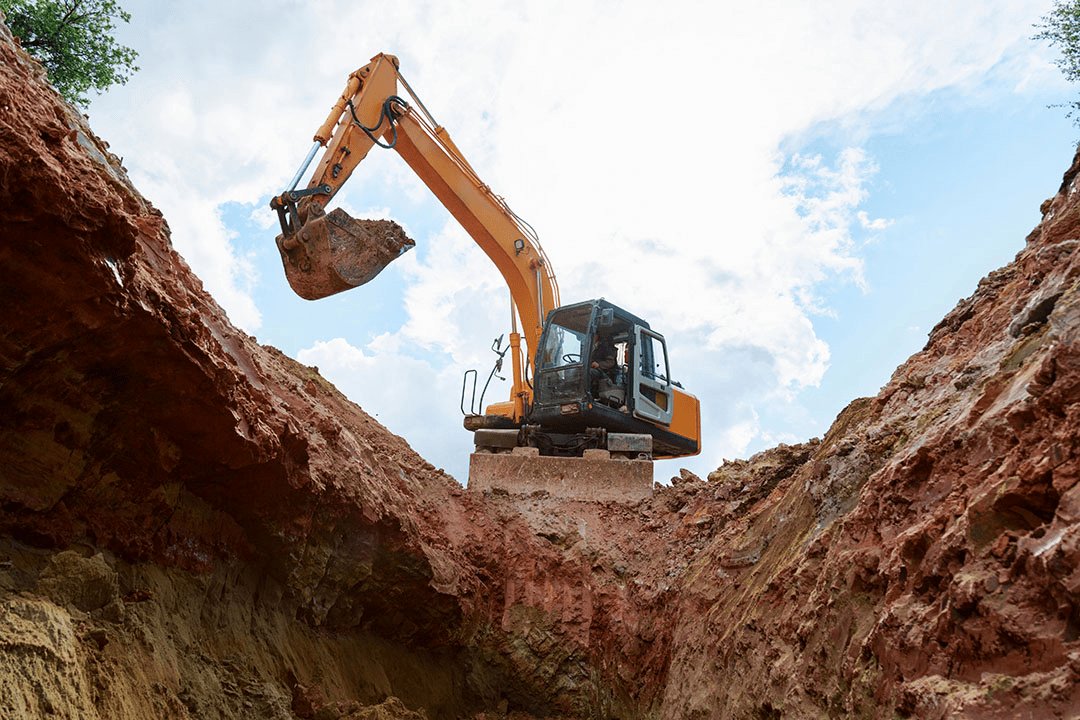
The soil test on a yard pad comes back with a number that nobody wanted: the top four feet will not hold the load. Maybe it is loose sand, maybe fill from an old tank pad, maybe a pocket of soft clay that a borehole happened to find. The choices are to build on it and hope, or to dig it out and put back something that will carry the weight.
Over-excavation and recompaction is the second choice. The weak soil is removed to a depth and width set by the engineer, the exposed bottom is proof rolled and tested, and then the hole is refilled in controlled lifts with approved material, each compacted to a specified density. The result is a block of ground under the slab that behaves the way the design assumed.
We plan and coordinate this work for slabs, aprons and equipment pads around Odessa, where heavy axle loads and thin margins make a settled corner expensive to repair later.
Working the hold points
Over-excavation interrupts a schedule in a predictable way. The dig runs first, then the engineer or the testing lab looks at the bottom, then the refill proceeds in lifts, each followed by a density test. Every hold point is a chance for the crew to stand idle, so we line up the testing lab, the haul trucks and the fill material before the first bucket comes out.
The biggest delay is usually waiting on an answer. If the dig reveals worse ground than the borings showed, the engineer has to choose a deeper cut or a different fix. We keep the engineer on the phone, take photographs and measure depths while the cut is open, so the answer comes the same day rather than after the next meeting. On a yard slab, a clean two-day recompaction beats a week of standing around. We also book the water truck early, since fill that is too dry will not reach density and fill that is too wet has to be dried, and both cost a day. A crew that starts with a loaded water truck, a calibrated gauge and a clear hold-point list finishes sooner than one that learns those things in the middle of the job.
What makes soil need replacing
The reasons vary. Loose or organic soil settles under load. Expansive clay swells and shrinks. Old fill carries trash, ash or voids. In the Basin, wind-deposited sand is common; Winkler County has a diagonal belt of active windblown sand dunes rising 30 to 40 feet above the surrounding surface, and rainwater collects in playas, which are low spots that stay soft after a rain. Building near those features means testing deeper than the surface suggests.
Rock can be the problem too. At McCamey, an attempt in 1928 and 1929 to build a million-barrel earthen oil storage tank failed because the underlying limestone could not support the weight of the crude. The lesson applies at any scale: the layer that looks solid may not carry what is put on it, and the engineer's boring log is the only way to know.
Reports, tests and sign-offs
The geotechnical report sets the depth of removal, the approved replacement material, the lift thickness, the density and the moisture range. The testing lab verifies the bottom of the cut and each lift, and the engineer signs off before the slab base is placed. We keep the log of tests and locations so anyone can retrace a pad later.
Permits are rarely the issue for the dig itself, but a large cut near a property line, a drainage way or a floodplain can draw review from the city or county. We check with the local permit office before work begins and keep the approval with the job file.
What recompaction costs
The price is cubic yards removed, cubic yards replaced, haul and testing. Select fill and crushed material cost more than native soil, and trucking is a large share. Depth matters more than area, since each added foot of cut multiplies volume and risks side slopes that need to be widened.
We recommend that owners carry an allowance and a unit price for extra depth. A bid that includes a unit rate for each extra foot turns a surprise into a calculation. Cheaper options sometimes exist, such as lime and cement soil treatment, and the engineer can compare them against full replacement. Imported material that replaces the weak layer is often engineered fill, which comes with its own gradation and testing.
Where this work shows up
In Odessa, over-excavation is common on infill lots and old yard sites where fill history is unknown. It also shows up on public projects near the I-20 and Loop 338 corridor, where the proposed Loop 338 freeway would double its corridor from about 200 feet to about 400 feet and bring heavy new pavement onto ground that has to be proved first.
Outside Odessa, Andrews is served by US Route 385 and State Highways 115 and 176, and a mobilization out that way is routine for us. The Andrews side of the Basin sees the same mix of fill, sand and caliche that Odessa does.
What we do and what we coordinate
Digging and hauling belong to earthwork partners we coordinate. Our people watch the cut, record depths, call the engineer and accept the bottom with the testing lab. The refill is placed by those partners under our supervision, and we hold the testing schedule.
Once the ground passes, building pad preparation finishes the surface and the concrete partners we coordinate take the pour from there. Because the same group keeps the log through both phases, a question about what is under the slab has an answer from one place. Oil, gas and midstream owners value that record when equipment pads are inspected years later, and the owner of a warehouse floor values it when a joint starts to move.
Bring the boring logs before the pour
If a soil report has flagged weak ground, send it with the pad layout and the target pour date. We will map out the cut, the refill and the testing, and give you unit prices for every extra foot of depth.
Common Questions
How deep does over-excavation usually go?
It follows the boring log and the load. Two to four feet is common under building slabs, and yard pads sometimes need less. The engineer sets the depth, and we confirm it at the bottom of the cut with a probe or a proof roll.
Can the removed soil be reused?
Occasionally, when it meets the specification after drying or screening. Many weak soils fail the test because of their moisture, grain size or organic content, so reuse is the exception. We separate and test it before deciding.
What is a proof roll and when is it done?
The exposed bottom is crossed by a loaded truck or heavy roller while an inspector watches for pumping or rutting. It is done before refill starts and again on the final surface before the base stone. Soft spots found are dug out and replaced.
Is treatment cheaper than replacement?
Often, when the soil is clay or silt that reacts to lime or cement. It is not the right fix for loose sand or organic fill. The engineer chooses based on the soil and the schedule, and we price both when asked.