
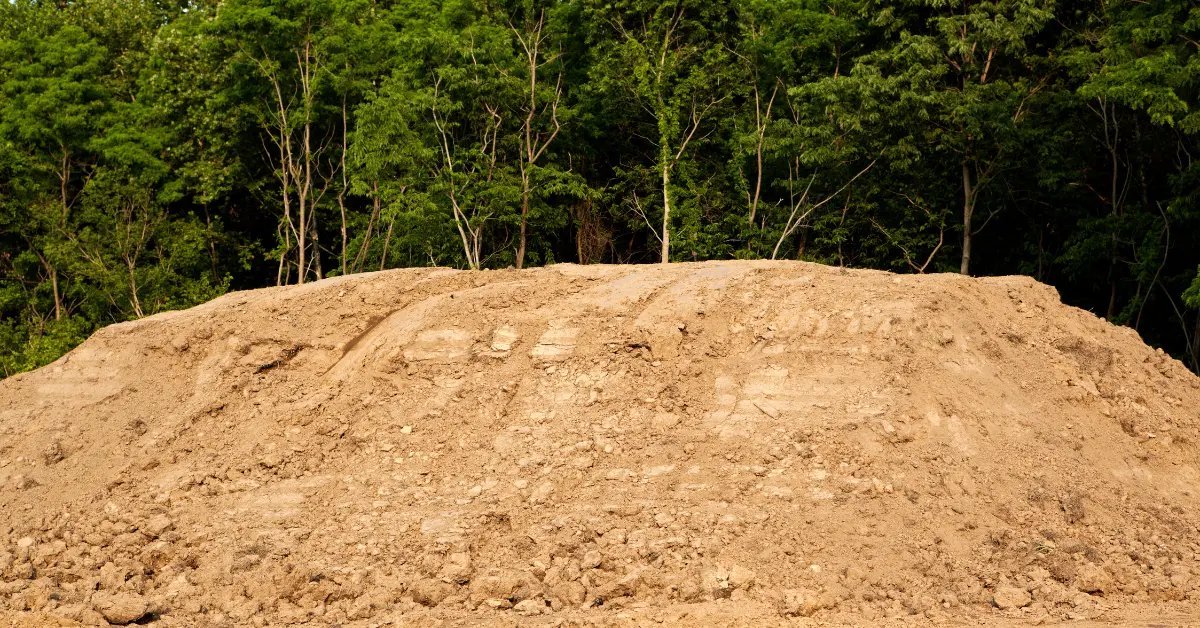
Engineered fill is dirt with a specification. It is not whatever the excavator leaves in the pile. It has a gradation, a plasticity limit, a maximum particle size, a moisture target and a density, and the engineer signs for each of them. Where a slab, an apron or a heavy-haul road will sit on top, that paper is what separates a stable pad from one that moves.
Soil stabilization is the other half. When the ground on site is not good enough and replacing it is too costly, the soil can be improved in place with lime, cement, fly ash, geogrid or a blend of aggregates. The mix is chosen from lab results on the actual soil, not from a catalog, and it is applied and compacted under test.
We plan and coordinate engineered fill and stabilization for pads, yards and roads around Odessa, working with earthwork partners and the owner's testing lab so the material that arrives matches the material that was approved.
Fill and stabilization by location
The work follows the build-out of the city. In west Odessa, along the I-20 and Loop 338 corridor, new yards and shops go in on open land, and the fill source is often a borrow pit within a few miles. State Highway 302 ends at the Loop 338 interchange with I-20 near Odessa, so a lot of heavy truck traffic funnels through that one area, and haul routes for fill have to work around it.
We also mobilize to West Odessa, which covers about 62.7 square miles in the center of Ector County, and to outlying towns where fill has to be hauled in. Distances matter in this market because trucks and time are the main cost of fill.
What the engineer approves
An approved fill submittal lists the source, the gradation, the plasticity index and the compaction curve. Stabilization requires a lab mix design that shows the strength the treated soil gains over time. Material that arrives on site is checked against the submittal, and trucks that bring something different are turned away.
Testing during placement follows the engineer's schedule, usually a density test for every certain number of square feet per lift. We keep the delivery tickets, the test sheets and a map of lifts together, which is what an inspector or a future owner will ask for. Stormwater and grading permits are handled with the contractor of record where the disturbed area calls for them.
Lead time for materials
Fill is bought before it is needed. A source must be approved, tested and scheduled, and a stabilization job needs lime or cement delivered on a day when the wind will let it be spread without drifting. We lock in the material and the haul trucks before the earthwork partner mobilizes.
The treated soil also has a curing window. Lime and cement mixes gain strength over hours and days, and the pad cannot be trafficked or paved until the mix has set to the engineer's number. On a short yard schedule we plan the treatment ahead of the other trades so cure time does not fall in the critical path. Treated ground under a paved lane is the same job as road subgrade preparation, and treated ground under a slab is part of building pad preparation, so we sequence them together.
Weather enters the plan as well. Spreading powder in a stiff wind wastes material and fouls neighboring work, so we keep a morning window open and watch the forecast closely. A pad that is mixed and sealed before an afternoon gust is worth more than one that is mixed late and blown thin.
Dust, chemicals and heavy equipment
Dry stabilizing agents are fine powders. Lime and cement irritate skin, eyes and lungs, so workers wear the right gear, spreading stops in high wind and water is applied to keep dust down. Bags and bulk trucks are handled by trained operators, and the surrounding site is protected from drift.
Fill placement means many trucks backing in a small area. We set haul routes, use spotters and keep foot traffic out of the dump zones. Compactors and graders work in a pattern so no two machines cross paths blind. Every worker on foot wears high-visibility gear, and a banksman is assigned when a truck must reverse across a work area. Daily toolbox talks cover the mix of chemicals, dust and traffic that day, because the conditions on a stabilization job change with the wind.
Buying material, not just moving it
Engineered fill costs more per yard than native soil, and the trucking cost grows with the haul. Stabilization costs depend on the admixture percentage the lab calls for and the depth treated. A thin treated layer is cheaper than a deep replacement, and a replacement with good local material is cheaper than one with imported stone.
Where the engineer allows a choice, we price replacement and treatment side by side, because the cheaper option changes with the soil and the haul. We work alongside lime and cement soil treatment when the soil responds, and over-excavation and recompaction when it does not.
Demand tied to the Basin economy
Ground work in this market follows energy and infrastructure. The Notrees wind and battery hybrid plant in Ector County has 152.5 MW of wind capacity that began operating in April 2009 and a 36 MW battery that began in December 2012, the kind of project that needs access roads, equipment pads and substation yards on prepared ground. Utilities and energy companies are steady buyers of that work.
Public and institutional work adds more. The UTPB Science and Technology Building is a 70,000 square foot facility with 41 labs that opened for the Fall 2011 semester, and a campus like that relies on stable subgrades for buildings, parking and walks. For a similar owner, our education and school projects start with the same proved ground.
Lock in the fill source early
Send the soil report and the pad layout. We will set the fill source, the stabilization option and the testing plan, and tell you when materials need to be ordered to hold your pour date.
Common Questions
How do you choose between fill and stabilization?
The engineer chooses based on soil tests, budget and schedule. Where the native soil can be improved in place, stabilization is often faster and cheaper. Where it is organic, loose or contaminated, replacement is the safer route.
Can caliche be used as engineered fill?
In many cases, yes. Caliche compacts into a firm base when it is broken down to the right size and moisture. The engineer reviews the gradation and sets the lift thickness, and the lab confirms the density.
How soon can a stabilized pad take traffic?
That depends on the mix. Lime-treated soils may take light traffic within a day and reach design strength over days to weeks. Cement mixes gain strength faster. The engineer sets the limit, and we do not release the pad earlier.
What if the delivered fill does not match the submittal?
The load is rejected. We check delivery tickets and look at each truck, and the testing lab samples at the pit and on the pad. A rejected load costs us a trip, but accepting it risks a failed pad.