
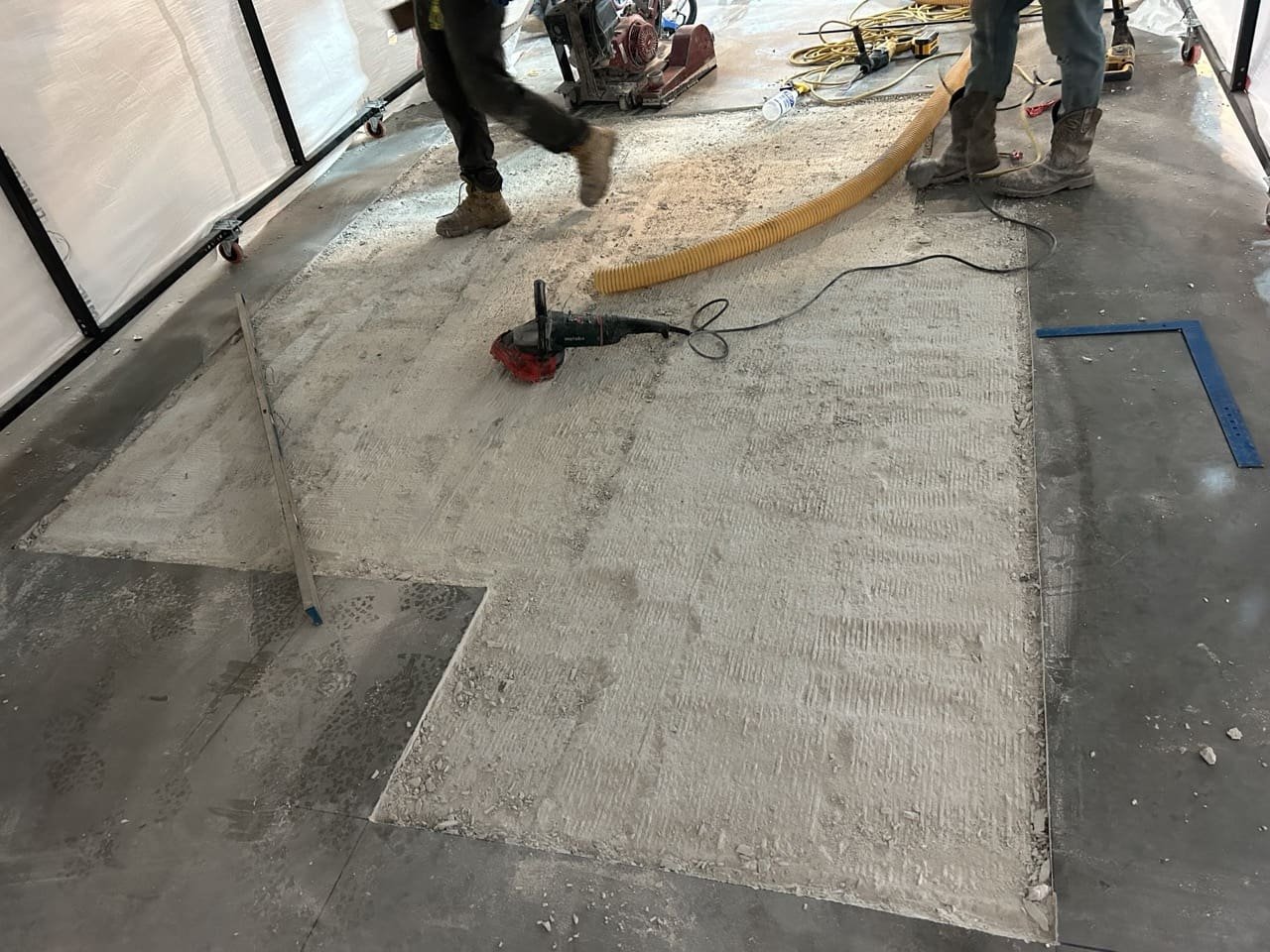
Heavy trucks find every weak spot in a slab. A joint edge breaks under a loaded axle, a crack opens and takes on water, a patch from last year pops out and leaves a hole that a tire drops into. Repair is the work of putting that surface back in service without tearing out more than the damage requires, and it starts with an honest look at why the concrete failed.
In Odessa the causes repeat. Wind and sand abrade the surface. Hot afternoons and cool nights work joints open and closed. Fluids soak into the paste and soften it. Steel that was set too close to the top rusts and pushes off the cover. And plain overloading, a lift truck or a crane outrigger on a slab never designed for it, breaks corners and punches through thin spots.
We repair what is repairable and replace what is not. A small spall gets a saw cut, a clean bond surface and a polymer or cement patch. A broken panel gets cut out, doweled and repoured. A slab with a failed base gets a different answer, which may include lifting or full replacement. We say which in writing before the work starts, along with the price for each choice.
A brief condition note combines measurements with photographs and documents the findings and completed repairs for the owner. That record helps when the same slab shows new damage and someone asks whether the repair held.
Short windows on working yards
Repairs are done around operations. A yard manager can give up one lane or one bay for a day, not a week, so we sequence the work to fit. We cut and clean in the first shift, place patch material by mid-morning and protect the area with barricades and curing cover until it reaches strength.
Fast-setting materials help, but they have limits in heat. We choose products for the temperature on the day and keep material out of the sun before mixing. Where a lane must reopen quickly, we plan the order of panels so traffic can shift from one to the next. Weekend and night work are options when the yard cannot give up a lane during the day, and we price them as a separate line so the choice is clear.
Concrete repair work we coordinate
Concrete trade partners saw, chip, clean and place the repair material, set dowels and rebar, form and pour replacement panels, and finish and cure the work. We coordinate trade partners for slab-lifting, heavy demolition and hauling when the job needs them.
Cutting is the quiet part of a good repair. Clean, square edges give a patch something to bond with. We use the methods described in concrete sawing, cutting and coring and follow with the sound-surface checks that decide where the cut line sits.
When repair becomes something else
Some failures call for a different tool. A slab that has settled in one corner may be a candidate for concrete leveling and slab lifting. A panel that is beyond saving goes under concrete demolition and removal before new pavement. Large yard areas may be better served by replacing sections with truck courts and dock aprons designed for the traffic.
We discuss options with the owner before pricing. A cheap patch over a bad base only repeats the problem a few months later.
Dust, noise and moving traffic
Cutting and grinding concrete makes silica dust. We use wet cutting or vacuum attachments, wear respirators where the work calls for it and keep other trades out of the cloud. Noise and flying chips need guards and barriers.
Traffic control matters in a working yard. We mark work zones, brief the drivers and keep a spotter at the entry. Patch areas are barricaded until the material reaches strength, so a truck driver does not roll into wet repair. Before we leave, we sweep the area, remove the barricades we set and walk the finished repair with the yard manager.
Ground, wind and the economy that loads the slabs
Northern Ward County contains active, windblown sand dunes prone to wind erosion, and less than 1 percent of the county is prime farmland. Wind-driven sand is a constant on slabs nearby, wearing surfaces, filling joints and piling against walls.
Ector County is flat to gently rolling ground on the lower Great Plains, between 2,500 and 3,300 feet in elevation, and under 1 percent of it counts as prime farmland. That land is used for industry, and the slabs on it carry a working load every day.
Odessa Economic Development targets logistics, warehousing and distribution, manufacturing, alternative energy and fuels, and technology and research. Each of those puts new axle loads on old pavement, and repair keeps older slabs useful as the mix of tenants changes.
Where the money goes
The cost of repair depends on depth and extent. Surface patches are cheap. Full-depth panel replacement is not. Access, traffic control and the need to work at night or on a weekend add to the price.
Joint rebuilding is worth pricing on its own. New sealant in clean joints protects the base and keeps water out. It costs far less than replacing panels that failed because the joint was left open. Reinforcing that is exposed in a spall is cleaned, coated or replaced before the patch, since patching over active rust only hides the problem for a season.
Where we repair most
Truck aprons and yard pavement see the most breakage, followed by shop floors, wash bays and dock approaches. Plants and warehouses need joint and floor repairs that keep forklifts moving.
For a view by building, see how we serve a warehouse or a manufacturing plant. The widest range of repairs comes from oilfield operators in oil, gas and midstream and from agencies in municipal and public works.
Repair walk and written scope
Walk the damaged areas with us and mark what must stay in service. We will lay out each repair in order, with lane closures and strength times the yard can plan around.
Common Questions
How do I know if a crack needs repair?
Cracks that are narrow and stable may only need sealing. Cracks that move, spall or let water into the base need more. We measure width, check for vertical offset and look at the surrounding panel before we recommend a treatment.
Can you repair concrete in the heat?
Yes, with changes. We choose materials rated for the temperature, shade the mix and place early in the day. Curing is faster to control with covers and fog, since a patch that dries too quickly will shrink and lose its bond.
Patch or replace, which makes sense for a damaged panel?
If the base is sound and the damage is local, a patch works. If the panel is cracked in several places or the base has failed, replacement lasts longer. We give both prices when the choice is close.
How long before trucks can drive on the repair?
That depends on the material. Some rapid repair mixes reach working strength in a few hours. Standard concrete takes days. We tell the yard manager the time in advance and barricade the area until it is ready.
Will the patch match the old concrete?
Color and texture will not match perfectly, especially on old sun-faded slabs. A structural repair is meant to carry load and last, not to disappear. We broom or trowel the surface to match the surrounding finish.