
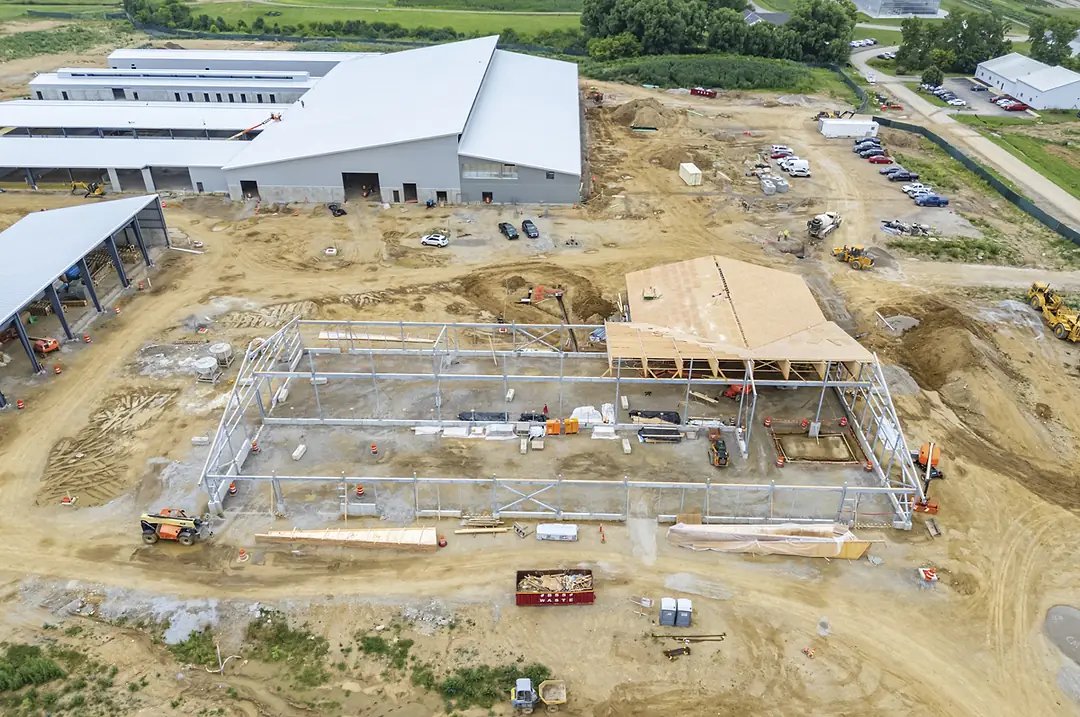
A feed alley takes a skid steer scraping manure twice a day, wet, with acid in it. A milking parlor floor takes hoof traffic, hose water and sanitizer. A hay barn slab takes a loader and a fully stacked load of bales. Agricultural concrete lives a harder life than most owners realize at bid time, and it rewards the contractor who asks what the floor will do all day instead of what it will look like.
Farm, ranch and dairy owners around Odessa are working with arid ground, long distances and limited water. They do not build often, and when they do, the project usually has to fit between seasons. We pour slabs, aprons, feed bunks, wash pads, equipment barn floors and processing building floors, and we coordinate the earthwork partners who shape the pads and drainage ahead of us.
Some of these owners also run side businesses that overlap with the oil patch, such as trucking, water hauling and equipment repair, so a single property can need an ag slab and a heavy yard in the same package. The sister page for oil, gas and midstream owners describes the yard side, and we apply the same attention to axle loads on a farm road.
What an agricultural slab costs and why
The main cost drivers are thickness, reinforcement, surface texture and drainage. A feed alley needs a textured surface for hoof grip and a slope that moves liquid to the drain. A wash pad needs a sump, a slope and a surface that resists chemicals. A hay barn needs a thick edge and a base that will not rut under a loaded tractor.
Distance adds cost on rural jobs, because ready-mix has a limited window and long hauls need retarders or a second plant order. Water is also part of the budget. Odessa draws city water from Colorado River reservoirs by way of the regional municipal water district, with well water from Ward and Ector counties added in, and rural properties often rely on their own wells or hauled water for curing. We account for water in the bid so the cure is not shortchanged.
Farm and processing buildings we pour
Owners ask us for equipment barns, pre-engineered metal buildings, shop floors, hay and feed storage, processing rooms and dairy structures. Slabs for metal buildings are common because metal buildings erect quickly and the floor is the main concrete item. Processing and packing buildings follow the food and beverage processing pattern, with sealed floors, floor drains and cleanable surfaces.
Cold rooms for produce, milk or meat need insulated slabs with vapor control and freeze protection. We coordinate that detail with the refrigeration contractor so the floor design matches the system.
Other concrete a farm or ranch may need
Besides buildings, ag owners ask for cattle guards, water troughs, tank pads, silage pads, fuel island slabs and driveways. Many also want concrete drainage ditches and culvert headwalls where a road crosses a draw. We cover the related culverts and headwalls work when the owner needs it, and we coordinate the earthwork needed to place them. Runoff is a real issue on flat ranch ground, so we often suggest a short concrete apron at gates and low crossings, where trucks cut the soil into ruts after every storm. Fuel and chemical storage pads get a curbed edge so a leak stays on the slab, and we discuss that detail with the owner before the pour. A well-placed slab on grade under a shop or barn often pays for itself in saved tires and repair time.
Working around animals, machinery and chemicals
Animals add a safety factor that a normal site does not have. We confirm with the owner where livestock will be during the pour, how gates are handled and who controls them. Fencing and signs keep animals off wet concrete and away from the forms. At dairies, we respect biosecurity routines, including footwear, vehicle washing and areas that are off limits.
Heat and dust are the other concerns. Summer work starts early and includes water breaks and shade. Sandy ground blows into forms and onto surfaces, and we control it by wetting the subgrade and cleaning the forms just before the pour. Chemicals such as fertilizers, fuel and sanitizers are stored on many properties, so we ask where they are before we mark out equipment.
Fitting a pour between seasons
Ag owners have busy periods when no one wants a crew on the property, and quiet periods when the weather is wrong for concrete. We work with the owner to find a window that suits both. For rural jobs, we plan the ready-mix order days in advance, confirm the haul time and arrange backup if a truck is delayed.
Gardendale is about 14 miles north of downtown Odessa, and trips like that from the plant are manageable. Longer hauls need more planning, and we use the right mix and the cooler hours of the morning to protect quality. We confirm road conditions the day before, since caliche roads can turn to soft ruts in a storm.
How we work with a rural owner
We start by walking the property with the owner and learning how the facility operates. We ask about animal movement, equipment size, drainage and plans for expansion. Then we put a plain written bid together with a sketch if the plans are not complete.
During construction, we keep the owner informed of daily progress and answer questions in the field. We leave the site clean, fences closed and gates latched. Before we leave we give the owner cure instructions in plain terms: how long to keep animals and equipment off, when the first light traffic is fine and when heavy loads can go back on. Owners who follow that schedule get the strength the design intended, and those who rush it tend to call us about edge damage in the first month.
Agriculture beside an oil economy
Oil remains the economic foundation of the Basin. Andrews County has produced over 1 billion barrels of oil since the first well was drilled in 1929, and Odessa sits at the center of that activity. Agricultural owners operate alongside it, sharing roads, labor and suppliers with the oil patch. That creates both opportunities and conflicts. Trucking schedules are crowded, and land values are shaped by the energy economy.
For concrete, the effect is a shared pool of crews and ready-mix plants. We schedule early with agricultural clients so that a large oilfield order does not push their pour off the calendar. Our work for logistics and warehouse developers and for rural commercial developers draws on the same crews, so we can balance demand across jobs.
Walk the property with us
Tell us what the building does, what animals or machines use it and when you need it finished. We will walk the site, mark the drainage and loads, and put the concrete in writing. Contact Concrete Contractors of Odessa to set up a visit.
Common Questions
What surface works best for a feed alley or cattle pen?
A broomed or grooved surface that provides hoof grip while draining well. The engineer or the operator sets the texture and slope, and we form it to match. We also place the joints so edges survive scraper blades.
Can you build a milking parlor floor?
We build floors with the slopes, drains and finishes the design calls for. The equipment supplier and the concrete partner work out embeds, pits and drain locations together.
How do you cure concrete when water is limited?
We use curing compounds, blankets or plastic sheeting where water is scarce. These methods hold moisture in the slab without constant wetting, and we choose them to match the weather.
What if the site is far from a ready-mix plant?
We plan the order for the haul, add retarder if needed and schedule early starts. Larger placements may be split into smaller pours so each load is placed while workable.
Do you coordinate earthwork for a barn pad?
Yes, through trade partners. We confirm the pad is shaped, compacted and drained before we form.