
Sidewalks get noticed only when something is wrong with them. A trip edge at a joint, a puddle that never drains, a ramp that is too steep for a wheelchair, a section that cracked because the base was never compacted. On a commercial site in Odessa, those failures turn into complaints and then into repair orders, and a sidewalk repair is never cheaper than doing it right the first time.
Flatwork covers a lot of ground. Sidewalks, building aprons, dumpster pads, entry slabs, bike paths, equipment pads, bus stops, patios and the slab sections between buildings all count. Most of it is four or five inches thick, reinforced lightly, and placed in a day, but each piece has to tie to something: a door threshold, a curb, a drain, a ramp, a parking lot.
Concrete Contractors of Odessa handles flatwork for commercial owners, general contractors, public agencies and utility companies. We coordinate trade partners for underground work and subgrade preparation, then form, place, finish and cure the concrete. Work is straightforward on paper and demanding in the field, which is why a crew that has done it many times matters.
Where we place flatwork
Most of our flatwork is in Odessa and the surrounding Ector County communities. TxDOT's proposal for roughly five miles of Loop 338 turns a four-lane divided road into a freeway with frontage roads, a shared-use path 10 feet wide and overpasses planned for Grandview Avenue and for 87th and 100th Streets. A path like that is exactly the kind of concrete that follows large road projects, since businesses and neighborhoods along the corridor often add their own walks and connections.
We mobilize crews to Rankin, Monahans, Kermit, Andrews and other nearby places when a project needs a team. Distance affects how many trucks can be dispatched inside the working time of the concrete, so we plan batch plants and delivery windows before we price the job.
How we build a walk that lasts
We start with grade, drainage and tie-in points. A sidewalk has to shed water away from the building, drop at the ramps and meet existing elevations at each end. We stake the line, set forms to grade, compact the base and check it with a string line. Reinforcing is placed on chairs where specified, and expansion material goes against fixed objects like poles and walls.
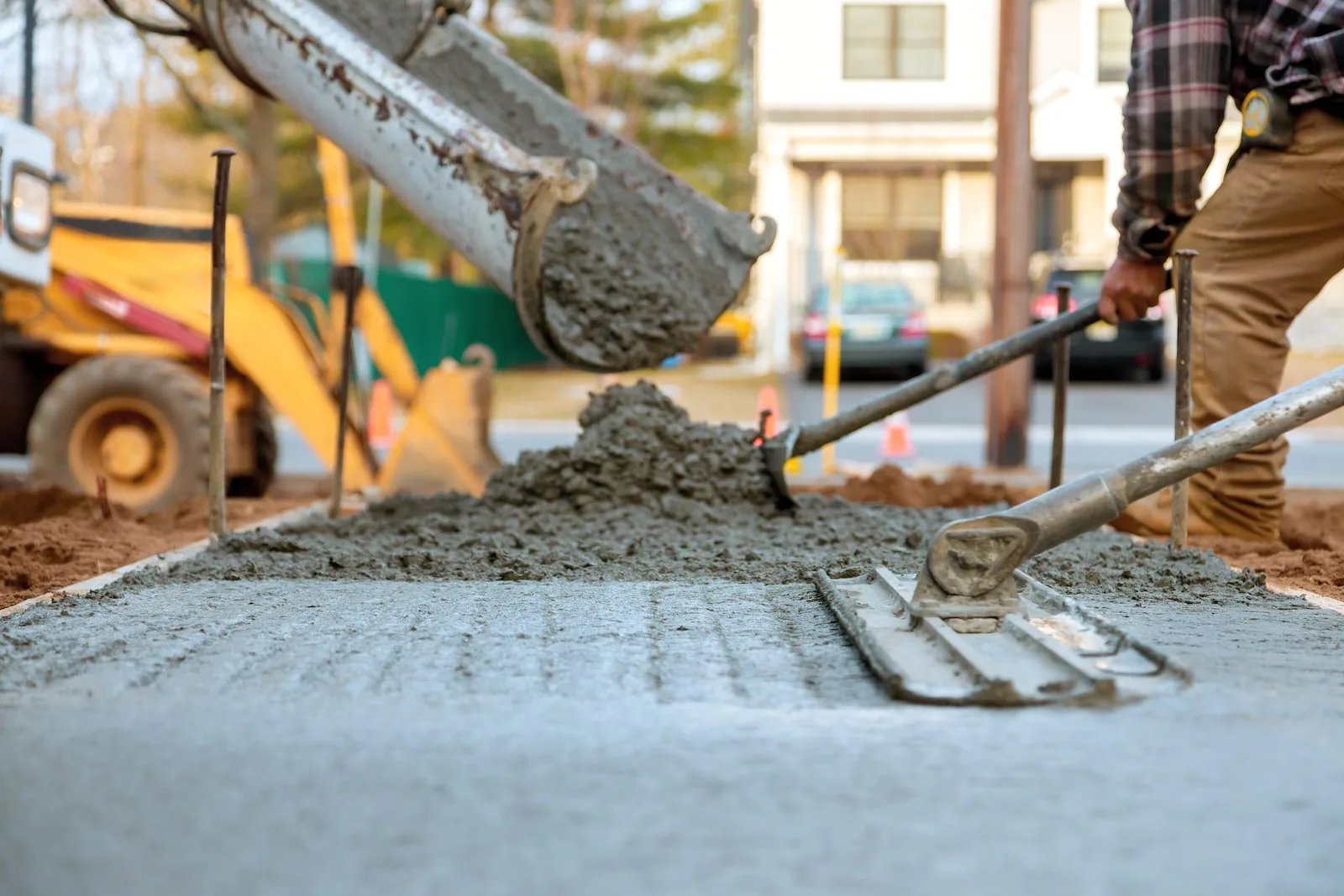
On pour day, the concrete is screeded, floated and given a broom finish for traction. Edges are tooled, joints are cut or tooled, and curing compound is applied. We stay on the site until the surface has set enough to resist rain or foot traffic, and we leave barricades up until it can take a load.
What concrete trade partners handle
Concrete trade partners do the formwork, rebar placement, concrete placement, finishing, joint cutting, curing and sealing. We also handle detail work such as truncated domes at ramps, handrail sleeves, bollard sleeves and light pole bases. Concrete formwork is a core skill, since flatwork lives or dies on clean edges and correct slopes.
Grading, utility trenching and compaction are handled by trade partners we coordinate. That keeps the schedule honest. If a sleeve is missing or a sprinkler line sits too shallow, our foreman talks to the general contractor before the pour, not after it.
Timing flatwork to the job
Flatwork usually comes near the end of a project, when the heavy equipment is gone and the grades are close to final. That is also when schedules are tightest. We stage forms ahead, confirm inspections, and pour in sections so access to the building is never completely blocked. A phased plan lets tenants and delivery drivers keep working.
Weather decides the day. Cold nights can slow the set, hot afternoons speed it up, and wind pulls moisture from the surface. We plan around the forecast and are willing to move a pour a day to protect quality. The sequence of forms, base, inspection, pour and cure is not shortened to hit a date.
Keeping people and vehicles apart
Flatwork near an operating building means pedestrian traffic, vehicles and delivery trucks nearby. We fence the work area, mark detours and keep an accessible path open where the owner requires it. Barricades stay up until the concrete can handle traffic, and we check them each morning.
Crews wear high-visibility clothing, eye and hand protection, and sun protection in summer. Cutting and grinding are done with dust control. When we work in a public right of way, we follow the traffic control plan, and the permit holder is notified before lanes or sidewalks close.
What decides the price
Length, width, thickness and finish are the obvious factors. Less obvious are the number of ramps, the amount of curved forming, the need for dowels at joints, and how far the concrete truck must travel. A long straight sidewalk with a simple broom finish is cheap per foot, while a small plaza with curves and many returns is not.
Access and sequence matter as much. If a pump is required because trucks cannot reach the forms, the price rises. If the pour must happen in short sections to keep a door open, labor rises. We list these items in the bid so you can see which choices drive the number, and we will adjust the plan to hit a budget if that makes sense.
Owners who rely on flatwork
Public agencies buy sidewalks, ramps and shared-use paths constantly, and municipal and public works groups are our most regular flatwork customer. Commercial developers need walks, aprons and dumpster pads in every shopping center and office park. Industrial sites need pedestrian routes that separate walkers from trucks, and government and municipal buildings need accessible routes from the street to every public door.
Utility companies and oilfield service owners also pour pads and walks around buildings, tanks and substations. A well-placed walk keeps people off the truck lane and out of the mud. For that reason, safety and flatwork are connected on industrial sites, not separate topics.
What a flatwork package covers
A typical package includes survey layout, base preparation check, formwork, reinforcement, concrete placement, finishing, joints, curing and cleanup. It may add ramps, truncated domes, handrail pockets, sleeves for lighting and irrigation, and saw-cut tie-ins to existing pavement. Related scope such as curb and gutter and accessible routes often arrives in the same set of drawings.
Odessa gets 12.28 inches of rain in an average year and has a record high of 113 degrees. Those extremes shape flatwork: the occasional heavy storm needs a surface that drains, and the long hot season calls for curing plans that keep the top from crazing. We detail both in the bid.
Send the site plan for a flatwork bid
Mark the walks, pads and ramps on the plan and note any phasing rules. A foreman can walk the site, check grades and give you a section-by-section price.
Common Questions
What thickness does a commercial walk need?
Four inches is common for walks that carry foot traffic only. Where trucks cross, such as at driveways or loading zones, the section is thicker and reinforced. The drawings or the public agency standard set the number, and we follow them.
Why do sidewalks crack?
Shrinkage, settlement and restraint are the usual causes. Joints at planned intervals give the concrete a place to crack cleanly. A compacted base and good curing reduce the rest. No sidewalk is crack-free, but it should crack in the joints.
Do you build ADA-compliant ramps and routes?
Yes. We build to the slopes, widths and landings on the plans, and a digital level confirms them before and after the pour. Where plan dimensions cannot be met on site, we tell the designer before concrete is placed.
Can you work in sections so the building stays open?
Yes. We phase the pours, keep one entrance accessible and set barricades where needed. The price reflects the extra mobilization, and we plan the order with the owner.
What finish is best for traction?
A medium broom finish across the direction of travel gives good grip and drains well. Heavy textures catch dirt and are hard to clean, so we avoid them unless the owner asks.