
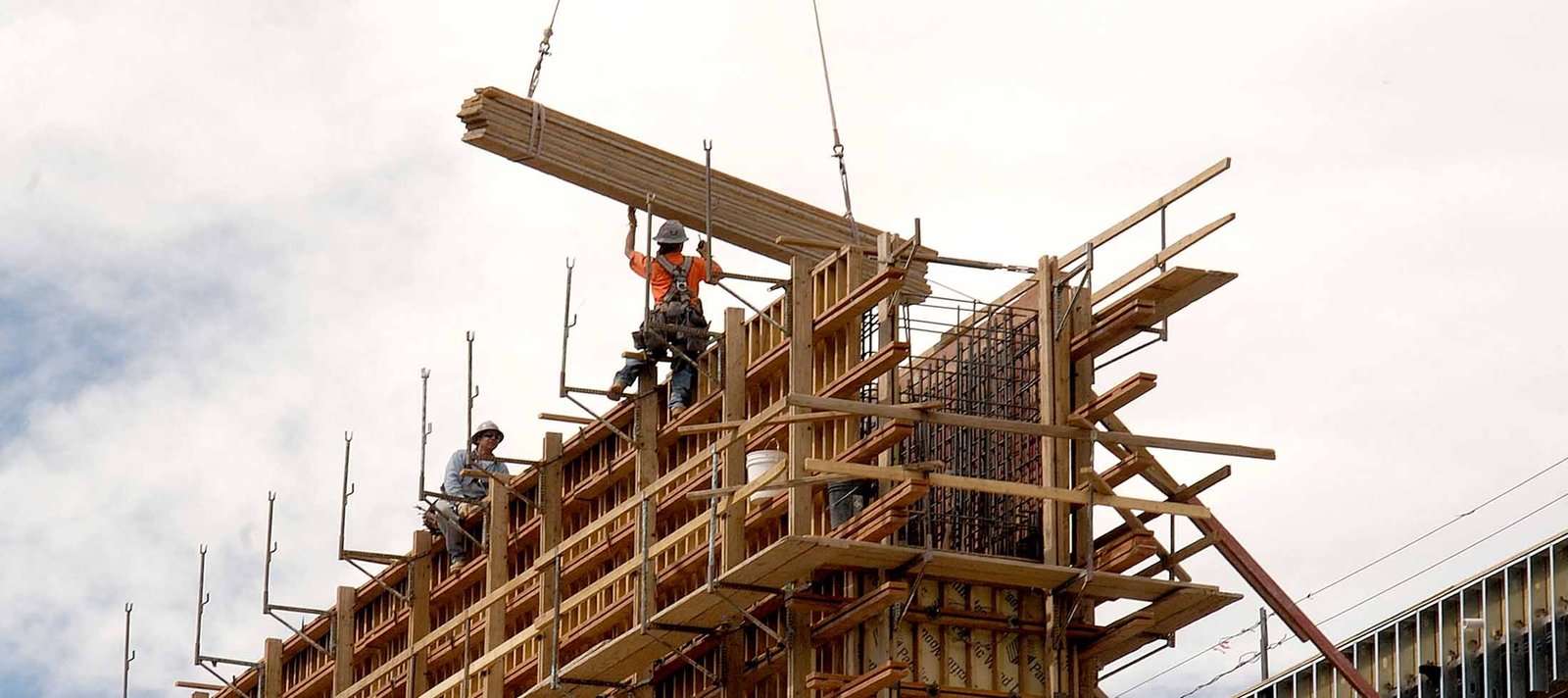
Forms are the mold, and a pour is only as straight as the mold holds. A form that bows under pressure leaves a bulge in the wall. A form that is off by an inch at the corner makes the steel erector's day worse. A form that leaks takes the paste with it and leaves a honeycombed edge that needs patching.
We build and strip formwork for footings, piers, grade beams, foundation walls, curbs, pads, stair and ramp sections, trench and sump forms and elevated decks around Odessa. Wood is the usual material for small and irregular work. Steel and manufactured systems suit repeat shapes, long straight runs and heavy pressure. The right choice depends on the shape, the number of uses and the finish needed.
Formwork is a big share of the labor on any structural concrete job, and it is where careful crews save money. Good layout means fewer corrections. Good bracing means fewer blowouts. Good stripping means forms that come out clean and go back in the truck for the next job.
Pressure, bracing and stripping
Fresh concrete presses hard on a wall form. A blowout is dangerous and expensive, so we calculate pour rate and height against the form's capacity, add ties and braces where the load calls for them, and keep people out of the strike zone during the pour.
Stripping can hurt people too. Forms stick, and a panel can fall as it releases. We use bars and lifts that keep hands out of the gap, and we strip only after the engineer's strength number has been met. On elevated work, shores stay until the release date. Stripped forms are stacked where they cannot fall, nails are pulled or bent flat, and loose lumber is cleared the same day.
What we build and in what order
The sequence is layout, base plates or sills, panels, ties, bracing, inspection, pour, strip, clean and store. We lay out from survey points, set the forms to line and grade, brace them to resist wind and pressure, and apply release agent. Openings, blockouts, keyways and embeds are set to the drawings and checked with the trade.
We pair formwork with rebar placement on every structural job, and with grade beams and elevated slabs and decks where forms carry weight overhead.
Who asks for forms
Most of our formwork goes to general contractors and CM firms holding a concrete scope inside a larger building contract. Plant and shop owners in industrial and manufacturing sectors call us for pits, trenches and heavy pads.
UTPB's Science and Technology Building, opened for the Fall 2011 semester, runs 70,000 square feet and holds 41 labs. Buildings of that kind, with labs, utility trenches and heavy mechanical pads, depend on a long list of formed concrete elements behind the finished walls.
Tolerances and what gets inspected
The specification states tolerances for line, grade, plumb and surface. Inspectors check forms before the pour for size, bracing, cover and embeds, and some look at release agent and cleanliness. We close forms only after the steel inspection is signed.
The adopted building code sets minimum times for form removal when the engineer does not give a specific schedule. The project specification and test cylinders give the practical answer. We write the stripping time on the pour plan and keep cylinder results with the forms log. Early stripping of a column or wall in cold, cloudy weather is the usual cause of damaged edges, which is why we hold to the strength number and not to the calendar.
Formwork resources and coordination
Concrete trade partners build, set, brace and strip the forms. We confirm that the formwork package includes lumber, plywood, stakes, ties and braces, with rented or purchased systems specified when a job calls for them. The formwork and placement teams work from the same details and agree on when each area will be released.
We coordinate trade partners for survey control, special shoring on tall work and engineered form systems that need a supplier's design. Our superintendent reviews those drawings with the supplier before delivery. Small repairs to forms happen on site, so we confirm that the formwork partner has tools and spare plywood available for that work.
Wind, sand and daily conditions
Wind gets into wall forms before the pour, so bracing must handle it. Blowing sand fills trench and footing forms overnight, and a crew that skips cleaning leaves grit in the bottom of the joint. We blow out the forms before the pour and cover them if a front is coming.
Heat dries wood forms, which swell when wetted, then pull away from the concrete later. We wet forms in hot weather, set release agent evenly and strip in the order that avoids edge damage. Details like these decide whether a formed edge comes out straight enough for the steel erector.
Water is the last item. Washing out forms with a hose adds mud to the footing, so we blow them out with air and spot-clean with a vacuum. If it rains, we pump the pooled water out before the first truck arrives.
Crews to the Basin
Concrete trade partners travel to Odessa and to West Odessa, an Ector County ISD community of about 62.7 square miles at the center of the county, and to Monahans, on I-20 in the northeast corner of Ward County, 36 miles southwest of Odessa. Lumber and form stock go on a trailer to the site.
A pour in another town still needs a truck route, a place to stack forms and a crew that can reach the site in good time. We plan each job with that in mind and use the nearest staging area we can arrange. The Odessa page lists the places we work most.
Form layout and pour plan
Hand over the plans and pour dates. We check the form types, bracing and strip times, then tell you what a crew can set in a day.
Common Questions
What type of form is best for a wall?
It depends on height, pressure and finish. Plywood panels with studs and walers handle small and irregular walls. Manufactured steel or aluminum systems suit tall or repeated walls. We pick the system by checking the pour rate and the number of uses.
How long do forms stay in place?
Until the concrete reaches the strength required to stand on its own, which depends on the mix and weather. Side forms often come off within a couple of days, while soffits and shores stay much longer. The engineer sets the release for elevated work.
Can forms be reused?
Yes. Good forms are cleaned, oiled and reused many times. Each use wears the surface, so the best sheets go to exposed faces and the worn ones go to backs and footings.
How do you prevent bulges and blowouts?
We size ties and bracing to the pressure of the pour, control the rate of placement and vibrate in lifts. We also check the form hardware before the pour. A blowout is almost always a bracing or rate problem.
Do you form curved or irregular shapes?
We do. Flexible plywood or built-up forms handle curves in curbs and pads. Complex shapes cost more in labor, so we price them separately and show how the shape affects the schedule.
Who owns the forms after the job?
We arrange form removal unless the contract says otherwise. Standard lumber and panels return to the formwork partner unless the contract assigns them to the owner. Specialty or rented systems go back to the supplier. If a project calls for forms to remain in place, such as stay-in-place decking, the drawings say so.