
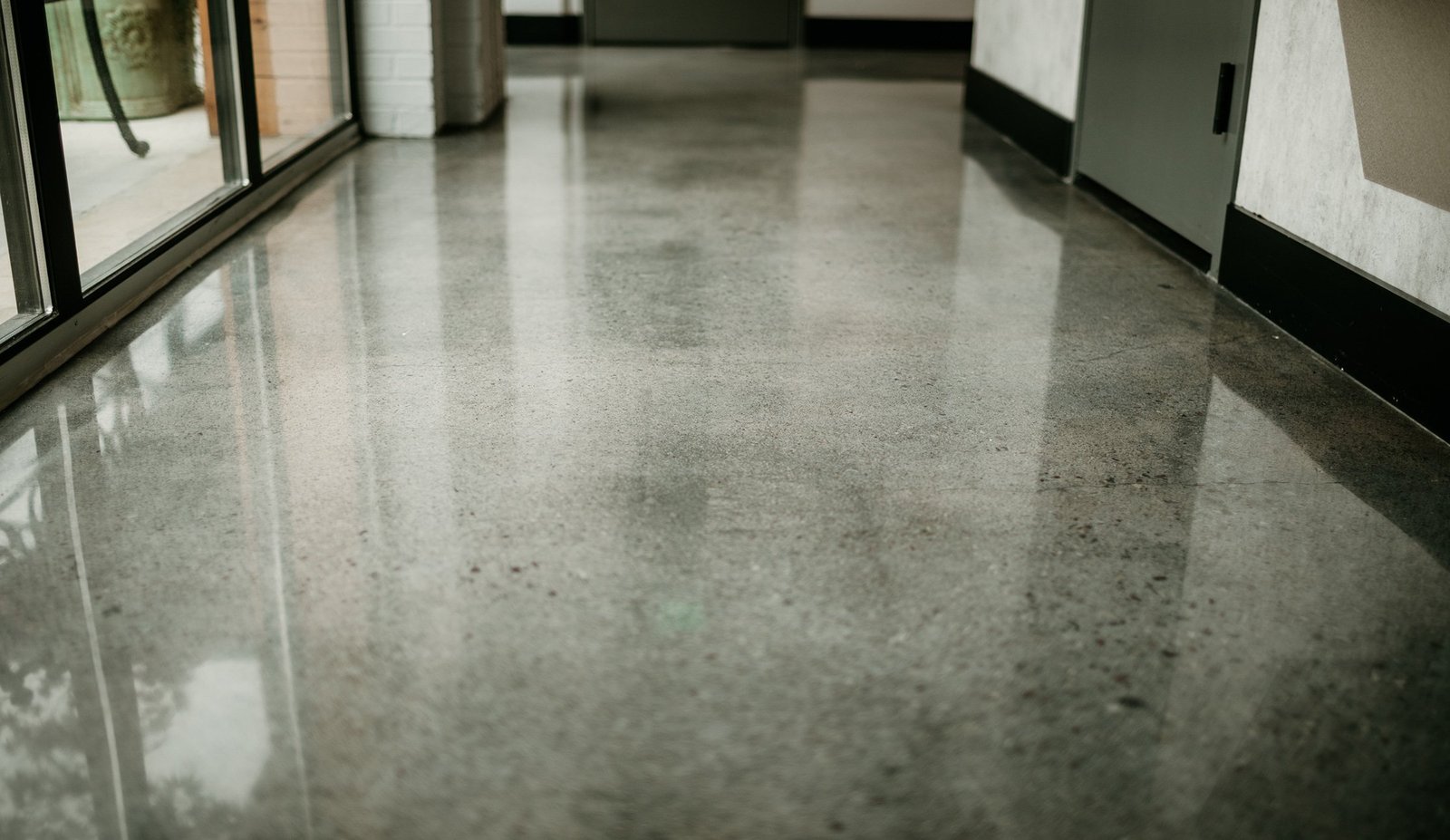
Most owners who ask about polished concrete in Odessa are not after a showroom. They want a floor that is easy to sweep, holds up to wheels, does not need wax and does not peel. Polishing is a mechanical process: the surface is ground with progressively finer diamond tooling, treated with a densifier, and burnished until it takes a sheen. The concrete under it does the work.
That means the quality of the polish depends on the quality of the slab. A floor placed in a hurry, finished with a hard trowel too early or cured badly will grind unevenly and show every flaw. We prefer to know about polishing before the pour, so the mix design, the way it is finished and the way it is cured are chosen with the final look in mind.
Concrete Contractors of Odessa places the slabs meant for polishing and hands them to a specialty crew for grinding, densifier and sealer. The result is a floor you can keep clean with a mop and a machine, and not a coating that needs recoating in a few years.
Buildings where polished floors make sense
Shops and warehouses are the practical answer. A polished retail center unit saves the cost of tile and the maintenance of wax. Classroom wings and corridors in an education building take heavy foot traffic and polish well. Medical offices and clinics like the cleanable surface, although they need extra care about slip resistance and joint treatment.
Auto service shops and equipment bays are a good fit because oil and tire marks wipe off a densified surface far more easily than off raw concrete. Where the floor will be exposed to harsh chemicals or constant moisture, we tell the owner that a different surface may be better. Polishing is not a cure-all.
Where polishing falls in the schedule
Polishing happens near the end of a project, but the planning begins at the pour. The slab needs to cure and dry before grinding, and the building must be enclosed so dust and moisture are controlled. If other trades will still be rolling lifts and hauling materials across the floor, the polish waits or the surface is protected.
A normal sequence is pour, cure, protect, complete the rough work, grind, densify, polish and seal. We keep the protection plan in front of the general contractor, since a floor damaged by drywall mud or paint cannot be brought back to a clean sheen without more grinding. Summer heat and wind speed up drying, so grinding can begin sooner than many owners expect, but the engineer and the finisher should confirm.
Joints, cracks and the look of a polished slab
Polished concrete shows what is in the slab. Joints, hairline cracks, trowel marks and color variation all stay visible. The best approach is to plan the joint layout with the building, cut the joints early, and fill them with a semi-rigid filler at the right time. Owners should expect some cracking and a floor that looks like concrete, not like stone. Cracks that open later can be handled under our concrete repair and restoration work, which includes routing, filling and re-polishing the repaired strip.
Aggregate exposure is another choice. A light grind leaves a smooth cream surface with little visible stone. A deeper grind shows more sand and aggregate. The choice affects how many passes the polishing crew makes, and cost goes up with depth. We show sample panels when we can, so there are no surprises.
Who buys polished floors
Education and healthcare owners in Odessa are active building clients. Ector County ISD and Medical Center Hospital are the city's two largest employers in the 2021 financial report, at 4,163 and 1,977 employees, and campuses like theirs value a floor with low maintenance cost. Schools and healthcare owners often put polished concrete in corridors, labs and service areas.
The Science and Technology Building near the University of Texas Permian Basin area is a 70,000 square foot facility with 41 labs that opened in the fall of 2011. Buildings like that show how institutional users think: a floor stays in service for many years, so the finish should be cleanable and repairable. Public owners, including the municipal and public works agencies, choose it for the same reason.
What polishing costs and what changes it
Cost depends on the number of grinding steps, the level of gloss and the condition of the slab. A floor that starts flat and clean needs fewer passes than a floor with patches, stains or heavy trowel marks. Densifier and sealer add material cost. Edge work along walls and around columns is slow because the large machine cannot reach, and a building full of columns or small rooms runs higher per square foot than an open hall.
Shop and plant floors that are polished usually start as industrial concrete floors with a hard-troweled finish. Compared with tile or sheet flooring, polished concrete is cheaper to install and lasts longer, but it is not free. Repair after a bad spill or damage requires grinding and re-sealing. We give the owner a maintenance outline with the bid: a daily sweeping routine, a neutral cleaner, and a schedule for burnishing.
Slip resistance, dust and silica
Grinding concrete creates fine dust that contains silica, so dust control is not optional. The crew uses grinders with vacuum attachments, wet or dry methods that suit the equipment, and respirators where required. The general contractor keeps other trades out of the area during grinding, and we set that up in advance.
Slip resistance is the other concern. A high-gloss floor can be slick when wet, especially at building entries. We recommend a lower sheen near doors and wash areas, and we test finishes against the owner's expectations. Accessibility rules apply to ramps and entries, and we build the surface to meet them.
Show us the floor you want
Tell us the building use, the traffic, the sheen you have in mind and any existing floor you want to match. We can look at a slab in place, grind a test panel and price the full surface from what we see.
Common Questions
Can any existing slab be polished?
Many can, but the result depends on the condition. Slabs with deep stains, major patches or very soft surface layers are harder. We inspect the floor, grind a test area and then decide. New slabs placed with polishing in mind give the best results.
Is polished concrete slippery?
It can be when wet. A moderate sheen, a slip-resistant sealer and mats at the doors reduce the risk. We discuss traffic and wet areas with the owner before choosing the final gloss.
Does polishing need a coating or wax?
No. The surface is densified and burnished, and it does not need wax. A guard or sealer is often added for stain resistance, and it may be renewed occasionally depending on traffic.
How soon after the pour can we polish?
Usually after the slab has cured and dried enough for the process, which may be weeks, not days. The engineer, the finisher and the weather all play a part. We confirm the date with test results rather than guess.
Can you match an existing floor?
We can come close, but color and sheen depend on the original mix and wear. We make a sample patch, show it to the owner, and adjust the grind level until it fits.